Short Moral Stories for Kids in English (With Lessons)

Short moral stories for kids are tales a child can hear in two or three minutes, where one character’s choice leads to a clear lesson, such as honesty, kindness or patience. For ages 2 to 6, pick one lesson per story, keep the plot simple, and finish with a question. The ten stories below are grouped by age, so you can find one that fits your child tonight.
Ask any parent what bedtime looks like and you’ll hear the same two words: one more. A child who has been told “be kind” fifty times will often shrug. The same child hears a story about a lion and a mouse once, and brings it up at breakfast.
That’s why storytime matters so much to us at Linden Montessori. We’ve put together ten short stories with a lesson, each one small enough to read in a couple of minutes. Some are old fables we’ve retold in plain, gentle words. Two are new stories about everyday moments a toddler would recognise. Each comes with a question to ask afterwards and a simple thing to try at home. There are also five quick stories you can read in under a minute.
If you’re also looking at schools, our Montessori programmes for ages 1.8 to 12 are laid out by age, just like the stories below.
The 10 stories at a glance
| Story | The lesson | Best for ages | Linden programme |
|---|---|---|---|
| Anu and the Red Swing | Waiting for your turn | 2 to 3 | Toddlers |
| Neel and the Little Jug | Mistakes can be fixed | 2 to 3 | Toddlers |
| The Lion and the Mouse | Small kindnesses matter | 3 to 4 | Montessori 1 |
| The Thirsty Crow | Think, then try | 3 to 4 | Montessori 1 |
| The Tortoise and the Hare | Steady effort wins | 4 to 5 | Montessori 2 |
| The Fox and the Stork | Think about how others feel | 4 to 5 | Montessori 2 |
| The Boy Who Cried Wolf | Trust comes from telling the truth | 5 to 6 | Montessori 3 |
| The Bundle of Sticks | We are stronger together | 5 to 6 | Montessori 3 |
| The Ant and the Grasshopper | Plan ahead | 6 to 12 | Elementary |
| The Two Goats on the Bridge | Giving way takes wisdom | 6 to 12 | Elementary |
Find a story by lesson
Looking for one particular value? Start here. The quick stories are in the Very short moral stories section further down.
| If you want to teach | Read | Ages |
|---|---|---|
| Honesty and trust | The Boy Who Cried Wolf; The Fallen Tower (quick story) | 3 to 6 |
| Kindness and sharing | The Lion and the Mouse; The Red Crayon (quick story) | 2 to 5 |
| Patience | Anu and the Red Swing; The Seed on the Windowsill (quick story) | 2 to 6 |
| Not giving up | The Thirsty Crow; The Tortoise and the Hare | 3 to 5 |
| Empathy | The Fox and the Stork; The Shy Hello (quick story) | 3 to 6 |
| Teamwork and compromise | The Bundle of Sticks; The Two Goats on the Bridge | 5 to 12 |
| Responsibility and planning | Neel and the Little Jug; The Ant and the Grasshopper | 2 to 12 |
Ages 2 to 3: first stories about everyday moments
At this age, a story works best when it sounds like the child’s own day: a park, a snack, a spill. Keep your voice slow and let them point at things. Our Toddler Montessori programme is built around the same idea of small, real, hands–on experiences.
1. Anu and the Red Swing

Anu ran to the park and stopped at the red swing. Someone was already on it. A boy named Veer was kicking his legs up high.
Anu’s hands turned into little fists. She wanted that swing, and she wanted it now.
Her aunt crouched down beside her. “We can wait together,” she said. They counted the pigeons on the wall. One, two, three, 4.
Then Veer hopped off. “Your turn!” he said.
Anu climbed on and pushed her feet toward the sky. Waiting had been hard. The swing was even better after.
What do you do when you have to wait for something?
Play a turn–taking game with a ball. Say “my turn, your turn” out loud as you pass it.
2. Neel and the Little Jug

Neel carried the small steel jug to the table with both hands. He tipped it slowly toward the glass. Then his hands wobbled, and splash! Water ran across the tray and onto the floor.
Neel’s face crumpled. “Oh no,” he whispered.
Mama didn’t scold. She handed him a sponge. Neel squeezed it over the tray, and squeezed again, until the table was dry.
“Again?” Mama asked.
Neel poured one more time, slower. The water rose to the line on the glass, and not a drop was lost.
What did Neel do after the water spilled?
Set up a tray with a small jug, a cup and a sponge. Let your child pour, spill and wipe without any rush.
Ages 3 to 4: stories that show kindness and thinking
Three–year–olds love animals and repetition, and they’re starting to understand that one action leads to another. Children in our Montessori 1 programme are at exactly this stage, learning social grace and to respect each other.
3. The Lion and the Mouse

A big lion was napping in the shade when a tiny mouse ran right across his nose. The lion woke up and caught her in his paw.
“Please let me go,” said the mouse. “One day I’ll help you.”
The lion laughed. How could a mouse help a lion? But he let her go anyway.
A few days later, the lion got tangled in a hunter’s net and couldn’t move. The mouse heard him roar. She ran over and nibbled the ropes, one by one, until the lion was free.
“Thank you, little friend,” said the lion.
Can a small person help a big person? How?
Let your child do one real helping job today, like carrying the spoons to the table.
4. The Thirsty Crow

It was a hot afternoon and the crow was very thirsty. At last she found a clay pot in a courtyard. There was water inside, but only a little, far down at the bottom.
She stretched her neck. Her beak couldn’t reach. She tried tipping the pot, but it was far too heavy.
The crow looked around and noticed some small pebbles on the ground. She picked one up and dropped it in. Plop. Then another. Plop. Bit by bit, the water climbed up the pot.
She didn’t have a longer beak. She had an idea. And then she had a long, cool drink.
What did the crow try first? What worked?
Drop pebbles or marbles into a glass of water with your child and watch the level go up.
Ages 4 to 5: stories about effort and feelings
By 4, children can follow a longer plot and talk about why someone did something. These stories are a good fit for the focus and independence we see in our Montessori 2 programme.
5. The Tortoise and the Hare

The hare was the fastest animal in the forest, and he never let anyone forget it. One morning the tortoise said, “Let’s race to the banyan tree.”
The hare giggled. “You? Race me?”
The race began, and the hare zoomed so far ahead that he couldn’t even see the tortoise. “I have lots of time,” he thought, and curled up under a neem tree for a nap.
The tortoise kept going. Step after slow step, he went past the sleeping hare and on toward the banyan tree.
When the hare woke up, he heard cheering. It was not for him.
Was there something you practised for a long time before you got it right?
Pick one small skill, such as zipping a jacket, and practise it a little every day this week.
6. The Fox and the Stork
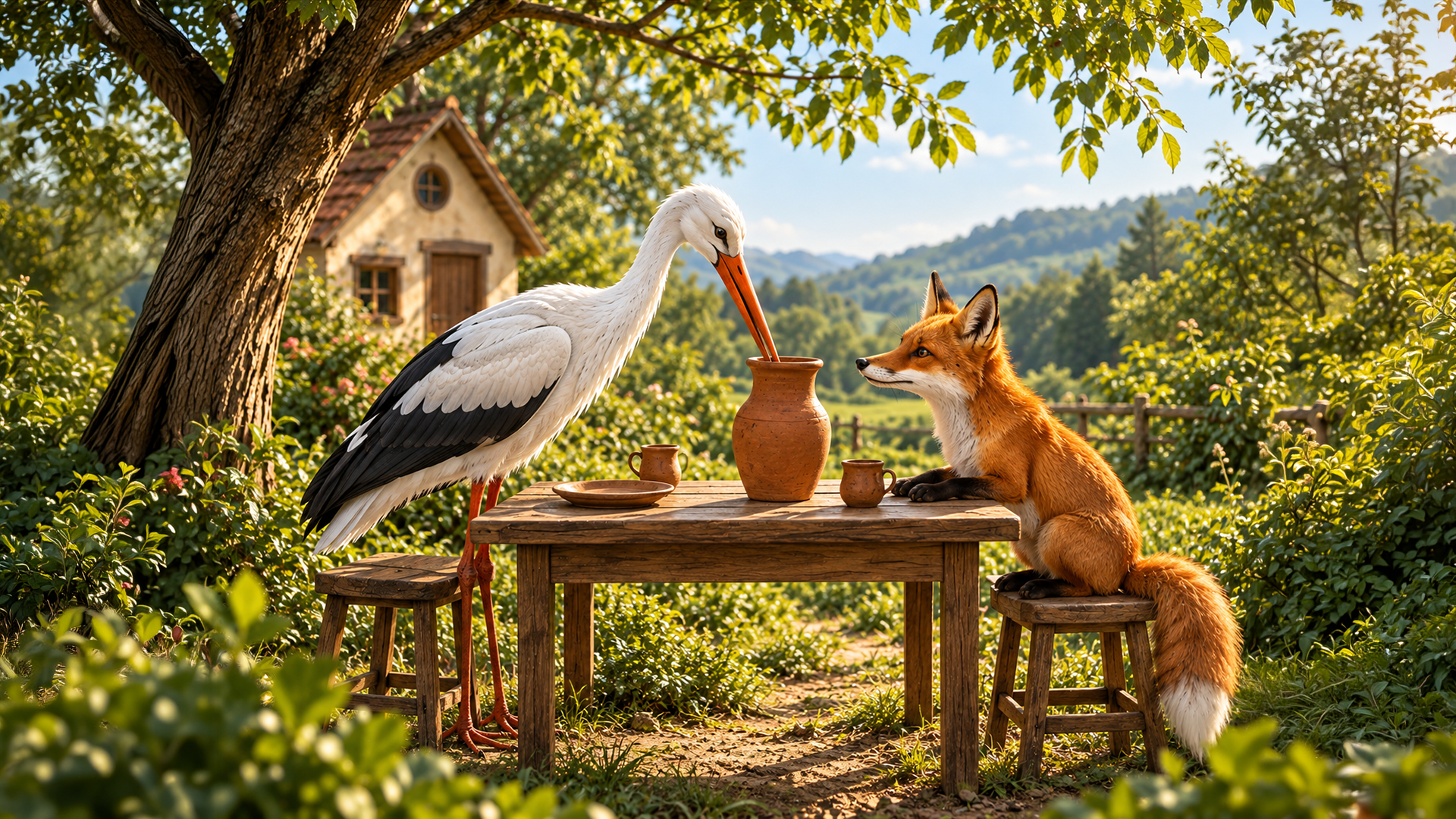
One evening, the fox invited the stork for dinner. He served a thin, tasty soup on a flat plate. The fox lapped it up in seconds. The stork’s long beak couldn’t pick up a single drop, and she went home hungry.
A week later, the stork invited the fox. She served her best stew in a tall, narrow jar. The stork’s beak reached the bottom easily. The fox could only sniff the top.
The fox felt hungry, and a little ashamed. “I’m sorry I did that to you,” he said. “Next time, I’ll serve food you can really eat.”
How do you think the stork felt at the fox’s house?
At snack time, ask your child to choose the cup or plate that would suit each person at the table.
Ages 5 to 6: stories about trust and teamwork
Five–year–olds are building friendships and learning that their words have weight. These two stories suit the stage our Montessori 3 programme calls the leadership year, when older children begin to guide younger ones.
7. The Boy Who Cried Wolf
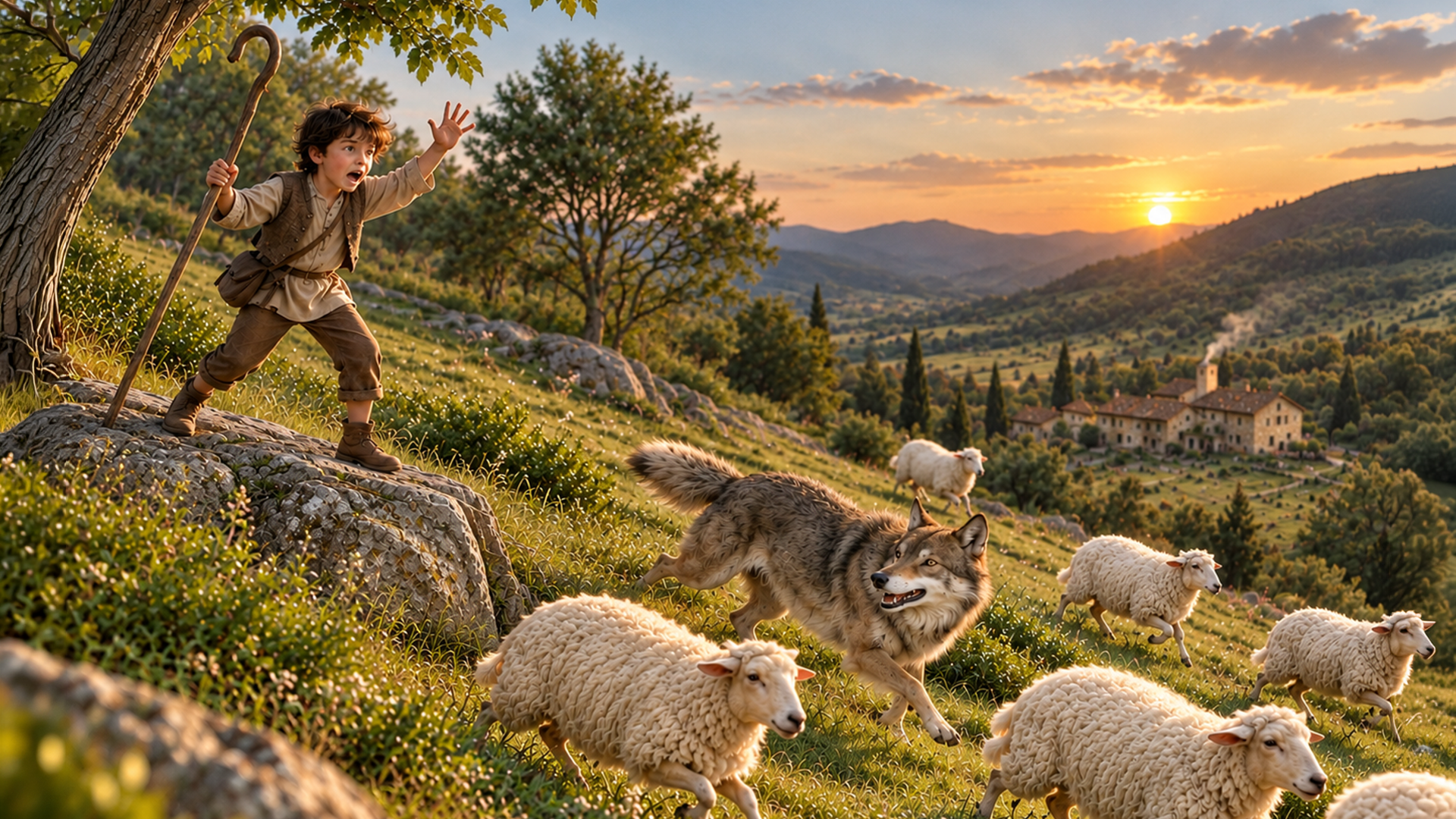
A shepherd boy looked after sheep on a hill above the village. It was a long, boring day. So he shouted, “Wolf! Wolf!” just to see what would happen.
The villagers dropped what they were doing and ran up the hill. There was no wolf. The boy laughed. They went home, annoyed.
The next day, he did it again.
Then one evening, a real wolf came. The boy yelled with all his might. Nobody came. They thought it was another joke, and the sheep scattered across the hillside.
In the morning, the villagers helped him find the flock. “When you shout for fun,” an old man told him, “we can’t tell when you really need us.” The boy said sorry, and he never played that trick again.
Why didn’t the villagers come the third time?
Talk about a time you told the truth even though it was hard, and how it felt afterwards.
8. The Bundle of Sticks

Isha, Rohan and Meera were cousins who argued about everything: who sat by the window, who got the biggest slice, who went first.
One rainy afternoon, their grandmother gave each of them a thin stick. “Snap it,” she said. Each stick broke in an instant.
Then she tied a bunch of sticks together with string. “Now try.”
Isha pulled. Rohan pushed. Meera tried to bend it. The bundle didn’t break.
“One stick is easy to snap,” said their grandmother, smiling. “A bundle is hard to break. That’s what you are, when you stick together.”
What could you do together that’s too hard to do alone?
Give your child a task that needs two people, such as folding a big towel.
Ages 6 to 12: stories with a little more to think about
Older children can talk about choices and what else a character might have done. In our Elementary years, children are encouraged to think and discuss, and these stories open that kind of conversation.
9. The Ant and the Grasshopper

All summer, the grasshopper sang and played in the sunshine. Nearby, the ant carried grains of food to her nest, day after day.
“Come and play!” called the grasshopper.
“I can’t,” said the ant. “The cold season is coming, and I’m getting ready.”
The grasshopper shrugged. There was so much food around. Why worry?
But when the cold came, the fields were bare, and the grasshopper had nothing to eat. He knocked on the ant’s door, shivering. The ant shared a little with him and said kindly, “Next summer, would you like to help me gather?”
The grasshopper nodded. He had learned something about tomorrow.
Is there something you could prepare today so tomorrow is easier?
Pack your school bag together the evening before, and notice how the morning feels.
10. The Two Goats on the Bridge

A narrow bridge crossed a rushing stream. It was just wide enough for one goat. One afternoon, two goats arrived at opposite ends at the same time.
“Let me go first!” said the first goat.
“No, I was here first!” said the second.
They stepped onto the bridge and met in the middle, nose to nose. Neither would move. They stood there for a very long time, and the stream rushed on below.
Then the second goat took a breath. She lay down low on the bridge. The first goat stepped carefully over her, and both of them crossed safely.
Who was being smart? What could the goats have said to each other?
Next time a small disagreement comes up, ask: “What’s a way where we both get what we need?”
Very short moral stories (under one minute)
Short on time? These five take under a minute to read aloud. They suit the car, a queue, or the last five minutes before lights out.
The Red Crayon
ages 2 to 5Mina had one red crayon and a drawing of an apple. Her friend Sara wanted red too. Mina thought for a second, then put the crayon in the middle of the table. They coloured two apples together.
Lesson: Sharing makes the fun bigger.
The Fallen Tower
ages 3 to 6Arun spent ten minutes building a tall tower of blocks. Dev ran past and knocked it over. Dev’s face went hot. “I’m sorry,” he said. “Can I help you build it again?” Arun nodded, and the new tower was even taller.
Lesson: Say sorry, then help put things right.
The Dropped Pencils
ages 4 to 7The teacher’s pencil box slipped off the desk and pencils rolled across the floor. Nobody asked for help. Tara knelt down and picked them up, one by one. The teacher smiled and said thank you. Tara hadn’t been looking for a reward.
Lesson: Help without waiting to be asked.
The Shy Hello
ages 3 to 6A new boy named Zayan stood by the sandpit, holding his bag tightly. Riya’s heart beat fast. She took a breath and said, “Hi! Do you want to dig with me?” Zayan’s whole face changed.
Lesson: A small, brave hello can start a friendship.
The Seed on the Windowsill
ages 3 to 6Kavya planted a bean in a small cup and watered it every morning. For a whole week, nothing happened. On the eighth morning, a tiny green curl pushed up through the soil.
Lesson: Good things grow slowly.
Write your own 10–line story
Children love hearing a story about themselves. Use your child’s name and a place they know, such as the park, the lift in your building or the school gate. Then follow this order:
- 1 Line 1: who the character is and where they are.
- 2 Line 2: a small problem.
- 3–7 Lines 3 to 7: what the character tries.
- 8 Line 8: what happens in the end.
- 9 Line 9: what the character learns.
- 10 Line 10: the lesson, in one sentence.
How to read these stories so the lesson sticks
A story doesn’t need to be performed perfectly. A few small habits make the difference:
If your child loves picture books, you can browse our recommended reading for more to read together.
How we use stories at Linden
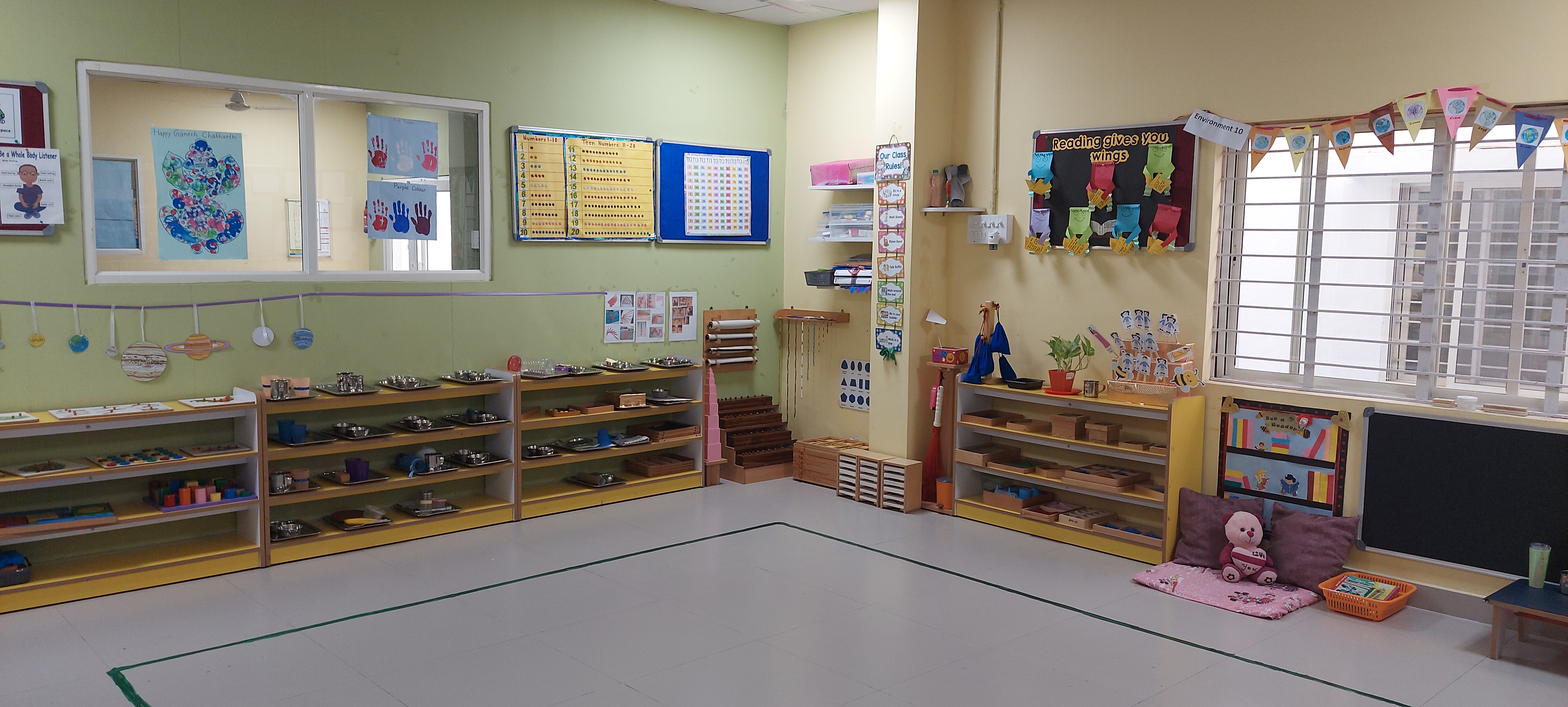
At Linden Montessori, reading and storytelling are an integral part of our classroom experience. Every classroom has a reading corner, and each floor of the school has a well-equipped library. During Circle Time, teachers read prescribed books linked to the children’s learning themes, while special storytelling sessions with puppets bring stories to life. On special occasions, we also invite professional storytellers to engage our children. From Mont–1 onwards, children are issued library books every Friday, encouraging them to develop a love for reading from an early age.

You can see our library and classrooms in the gallery. And to read what other families say about their experience, visit what Linden parents say.
Frequently asked questions
At what age can I start reading moral stories to my child?
Most children enjoy simple stories from around 18 months to 2 years. Start with short stories about everyday things, like snacks, spills and turns, instead of long plots. By 4 or 5, children can follow cause and effect and talk about why a character made a choice.
How long should a short moral story be?
For toddlers, aim for about one or two minutes. For preschoolers, three to five minutes is a good range. For older children, a story can run a little longer. Stop while they still want more, since that makes them ask for storytime again.
How do I teach morals without lecturing?
Ask instead of telling. After the story, try “What do you think happened and why?” or “What would you have done?” Children remember a lesson they worked out themselves much better than one they were handed.
Are talking–animal fables right for young children?
Many children love them from around age 3. Some Montessori educators prefer to start younger children with realistic stories about everyday life, so we’ve mixed both in this list.
What are the best moral values to teach a 3–year–old?
At three, focus on sharing, taking turns, saying sorry and helping. These are concrete, and your child can practise them at home and at the park today. Bigger ideas like greed or integrity can wait until 5 or 6.
How many moral stories should I read in a day?
One or two is plenty. Reading the same story several days in a row does more than racing through new ones, because repetition is how young children absorb a lesson.
Can I tell these stories in Hindi, Kannada or another language?
Yes. Many Bengaluru families read in English and talk about the lesson in their home language, so the idea lands in the language their child thinks in. Use whichever language your child finds easiest for talking about feelings.
How does Linden Montessori use stories in the classroom?
At Linden Montessori, stories are woven into classroom learning through Circle Time, where teachers read books connected to the children’s learning themes. We bring stories to life through special puppet storytelling sessions and visits by professional storytellers on special occasions. Our classroom reading corners, well-equipped libraries, and weekly library book issuance from Mont 1 encourage children to develop a lifelong love of reading.
Experience Storytelling & Montessori at Linden
From dedicated reading corners and well-equipped libraries to Friday book issuances and creative Circle Time, discover how Linden Montessori nurtures young imaginations in Whitefield, Bangalore.
Schedule a personalized campus tour today to see our learning spaces and library firsthand.