Kids Potty Training: 7 Easy Steps for Toddlers
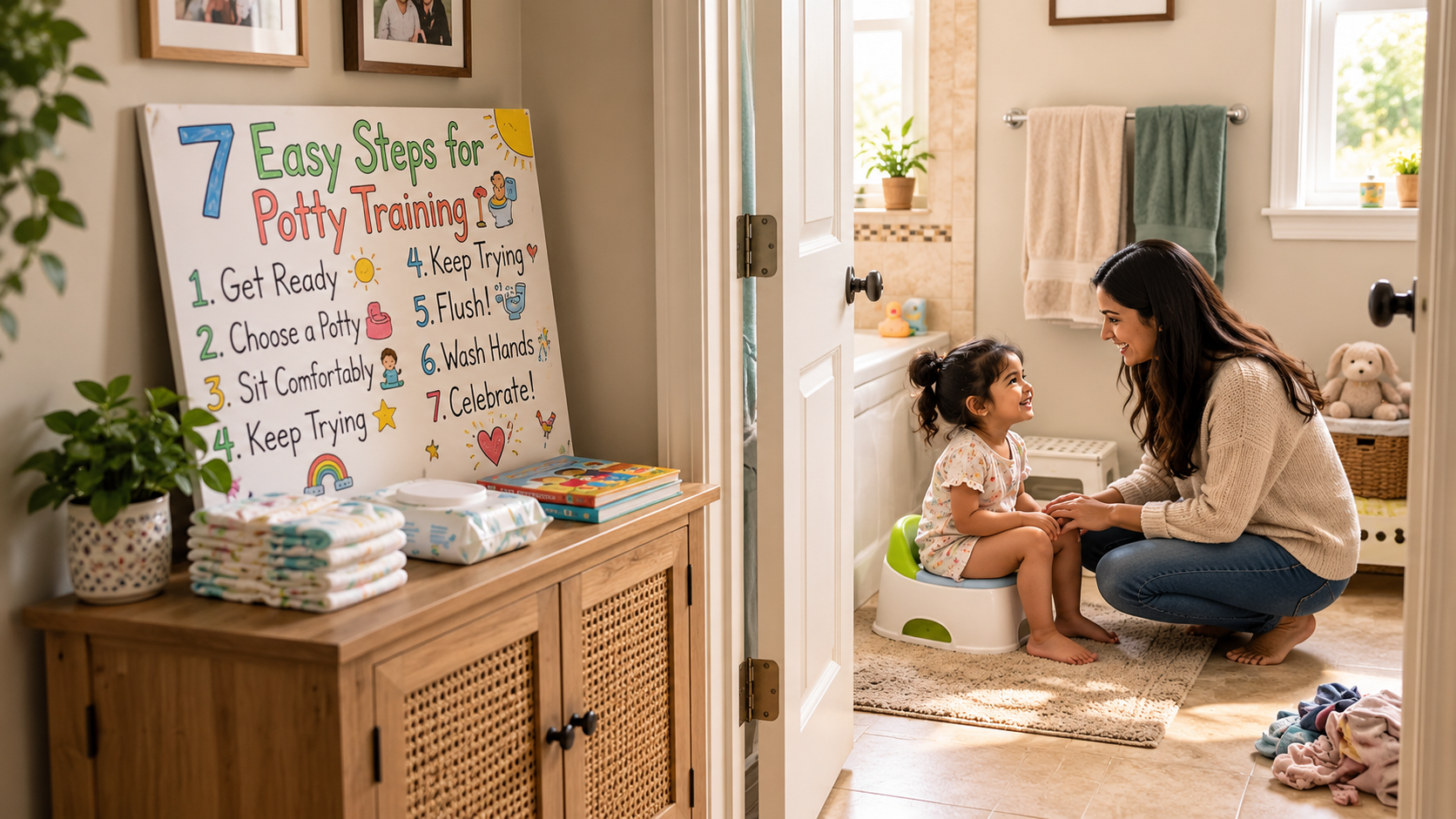
Most children are ready for potty training between 18 and 36 months, when they can stay dry for about two hours, pull their pants up and down, and show interest in the toilet. Introduce the potty, build a simple routine, praise effort, and stay calm through accidents. Most children take a few weeks to a few months to get the hang of it.
If you are staring at a pile of diapers and wondering when this phase will end, you are in good company. Baby potty training feels like a huge milestone because it is one. The good news is that there is no single right method. What works is a child who is ready, an adult who is patient, and a routine that stays the same from one day to the next.
At Linden Montessori, we meet many Whitefield families who ask about toilet training just before their child joins preschool. If you are also comparing schools, our parents’ guide to the best preschool in Whitefield explains what to look for. This guide covers when to start toilet training, how to know your child is ready, seven steps that work for most families, and what to do when things go sideways.
When should you start potty training?
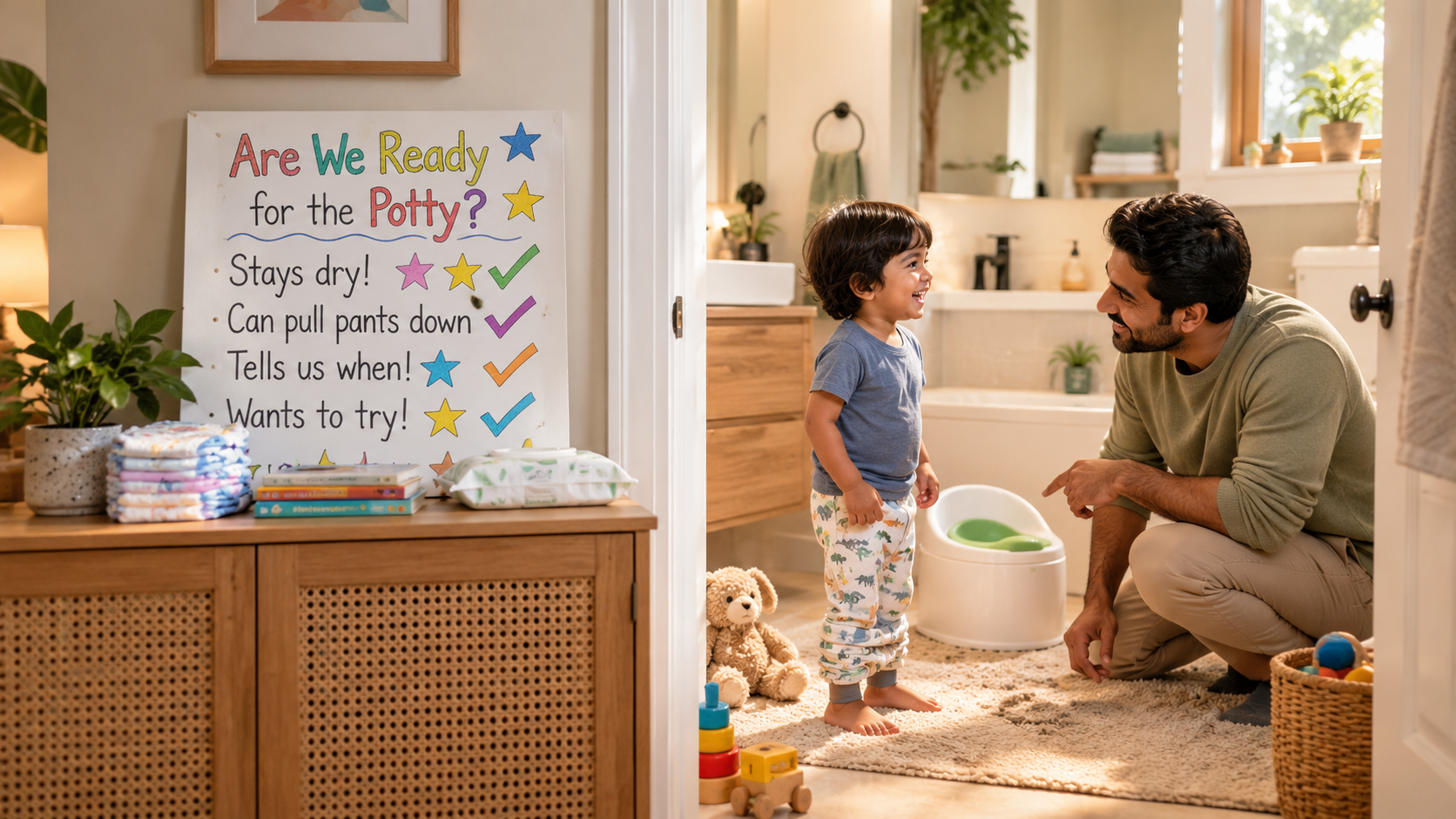
Most pediatricians agree that children are capable of toilet training between 18 and 36 months. Age is only a rough guide, though. Readiness matters more than the calendar.
Starting too early often means weeks of frustration and more accidents. Waiting too long can bring more resistance, because a strong-willed three-year-old may simply say no. Watch your child, not the birthday.
Try to avoid starting during a big change such as a house move, a new sibling, or the first weeks at daycare or preschool. A child who feels settled learns faster.
What are the signs your child is ready?
Your child does not need to show every sign. The more of these you see, the smoother things tend to go.
If you are seeing only one or two of these, keep practising the small skills, like pulling pants up and down, and try again in a few weeks.
What do you need before you start?
You do not need a long shopping list. Keep it simple:
7 easy steps for kids potty training
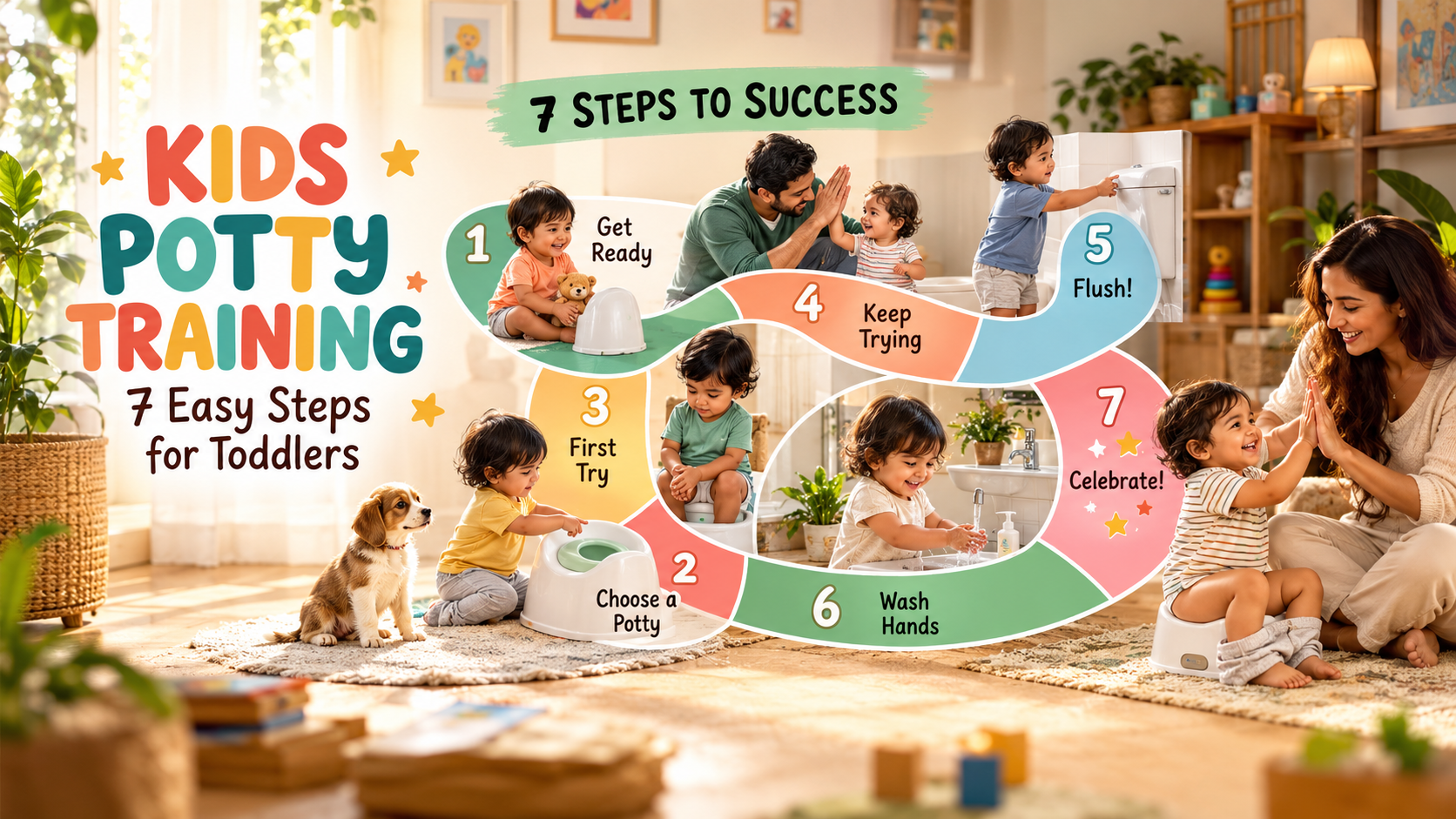
Step 1: Make the potty a normal part of the house
Before asking your child to use it, let them get used to it. Keep the potty in the bathroom or a familiar corner and let them sit on it with their clothes on. Read a picture book there. Let them decorate it with a sticker if they like. The goal is for the potty to feel boring and safe.
Step 2: Show them how it works
Children learn by watching. If you are comfortable, let your child see a parent or older sibling use the toilet. Use the same simple words every time, such as pee, poop and potty, so everyone at home and at school is speaking the same language.
Step 3: Set a routine
Offer the potty at predictable times: right after waking up, after meals, before leaving the house, after arriving somewhere new, and before bed. Keep each sit short, around two to five minutes. A book or a song can help. If you need fresh material, try these short moral stories for kids.
If nothing happens, that is fine. Try again later without comment.
Step 4: Switch to underwear when they are ready
Once your child is telling you they need to go, or is staying dry most of the day, move to training pants or underwear. Let them choose a pair. Many children find it motivating, and feeling wetness helps them link the sensation to the potty. Some families keep diapers for naps and nights only at first.
Step 5: Praise effort, not just results
Celebrate sitting, trying and telling you, not only success. A high-five, a sticker or a cheerful “you told me!” works well. Keep rewards small. Never scold, shame or compare your child with a cousin or a neighbour’s child. Fear and embarrassment slow learning down. Young children also learn best when learning feels like play, which is the idea behind how Linden Montessori balances learning and play. A sticker chart can be part of that. You can also make a fun routine with our activity books.
Step 6: Teach hygiene from day one
Build the same sequence every time:
- 1 Use the potty
- 2 Wipe
- 3 Flush or empty
- 4 Wash hands for at least 20 seconds with soap
- 5 Dry hands
Teach girls to wipe front to back to lower the risk of urinary infections. Hand-washing at this stage becomes a lifelong habit.
Step 7: Stay calm through accidents
Accidents are part of the process, even weeks after a good run. Clean up without fuss. Older toddlers can help carry wet clothes to the wash. That is a natural consequence, not a punishment.
“That’s okay, let’s change and try next time.”
Which potty training method should you choose?
There is no winner. Pick the one that matches your child’s temperament and your family’s schedule.
| Method | How it works | Best for | Watch out for |
|---|---|---|---|
| Child-led | You offer the potty and follow your child’s lead | Relaxed families, sensitive children | Can take longer |
| Parent-led routine | You set fixed potty times and remind your child | Working parents who want structure | Needs consistency from every caregiver |
| Intensive (about 3 days) | Several days at home, mostly without diapers, with frequent potty trips | Families who can stay home for a few days | Tiring for adults, not right for every child |
Many families end up mixing approaches. If a method is making everyone miserable after a week or two, it is fine to pause and try again later.
What about night-time training?
Daytime and night-time control develop separately. Many children stay dry at night only months, or even years, after they manage the day. This is normal and has nothing to do with effort or intelligence.
Keep a diaper or training pant for sleep until your child wakes up dry most mornings
Offer the potty just before bed
Reduce drinks in the hour or two before bedtime, but do not limit fluids through the day
Keep a potty near the bed if your child wakes at night
If your child is still wetting the bed regularly well beyond the preschool years, speak to your pediatrician.
Common potty training problems and what to do
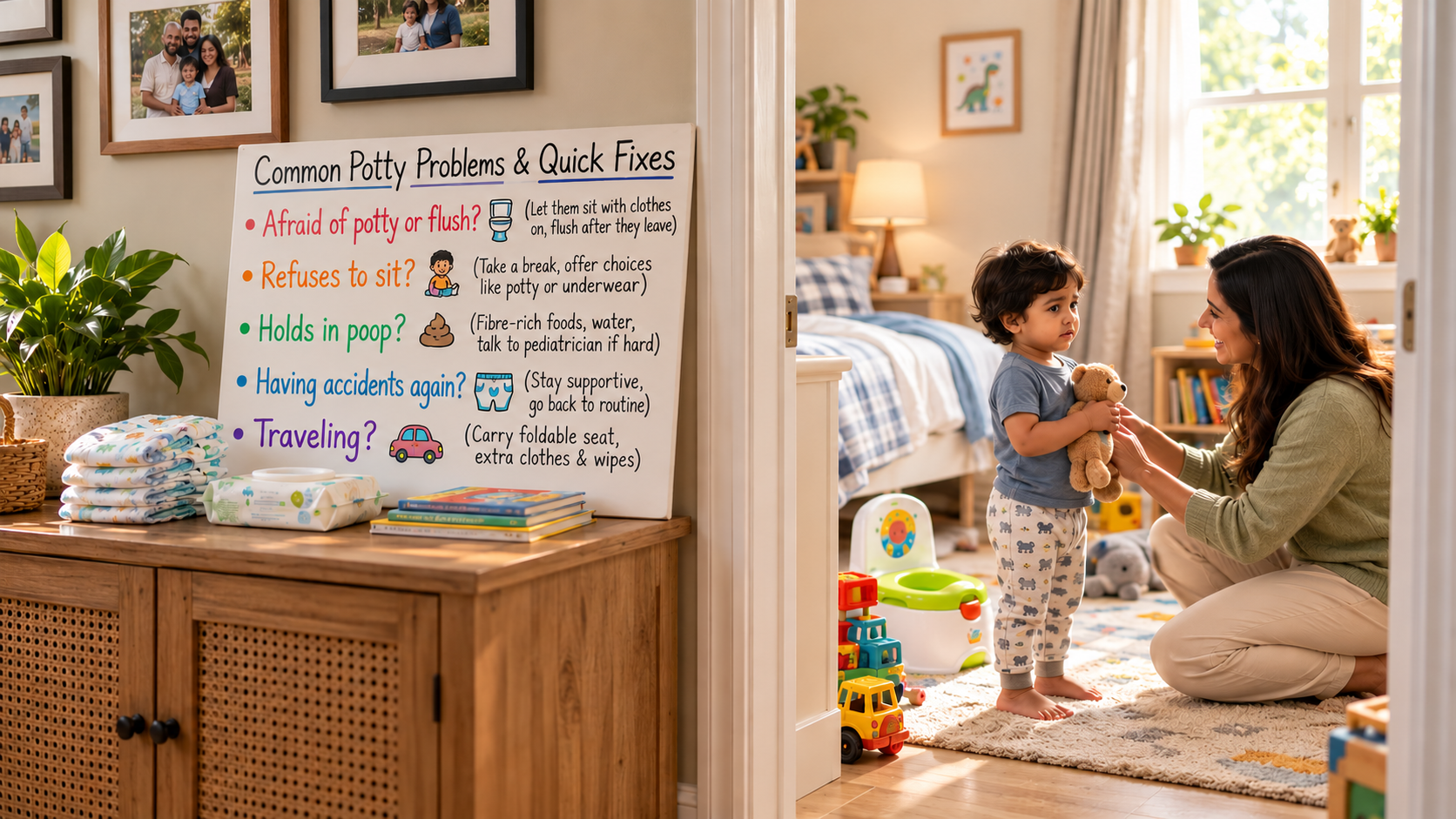
My child is afraid of the potty or the flush.
Go back a step. Let them sit with clothes on, flush after they have left the room, and never force it.
My child refuses to sit.
Take a break for a week or two. Pressure usually backfires. Offer choices, such as which potty or which underwear.
My child holds in poop.
This is common and is often linked to constipation. Offer fibre-rich foods such as fruit, vegetables, whole grains and plenty of water, and talk to your pediatrician if stools are hard or painful. Constipation can stall toilet training, so it is worth fixing early.
My child was trained but is having accidents again.
Regression often follows stress, illness, travel or a big change. Stay supportive, go back to the routine, and it usually passes within a few weeks.
It is too hot or we are travelling.
Carry a small foldable seat or potty, extra clothes and wipes, and stick to the usual toilet times.
Tips for daycare, school, grandparents and busy households
Share the same words and routine with every caregiver, including the school or daycare
Ask what kind of toilet or seat the school uses and try to match it at home
Write the routine on a card for grandparents and helpers
Pack two spare outfits in the bag for the first weeks
How Linden Montessori supports toilet learning
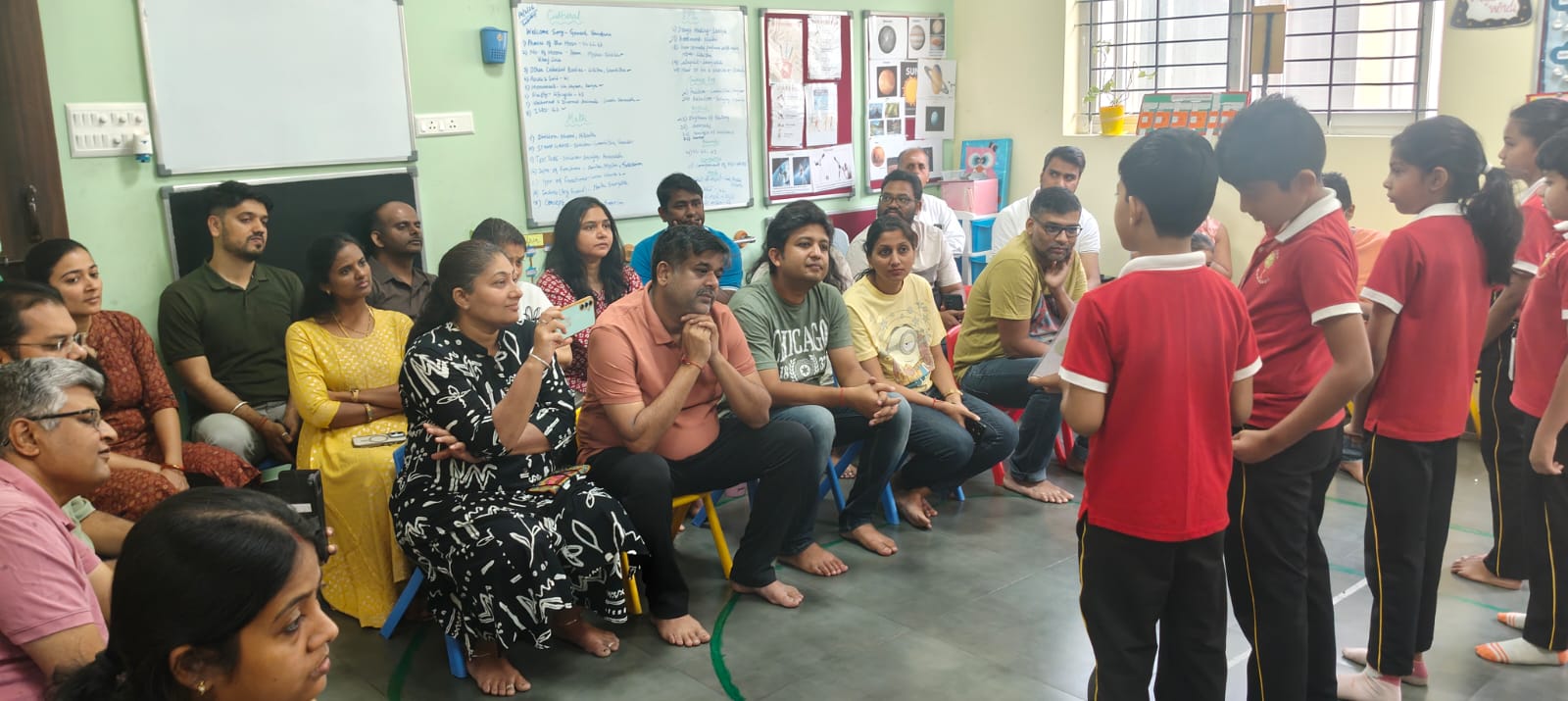
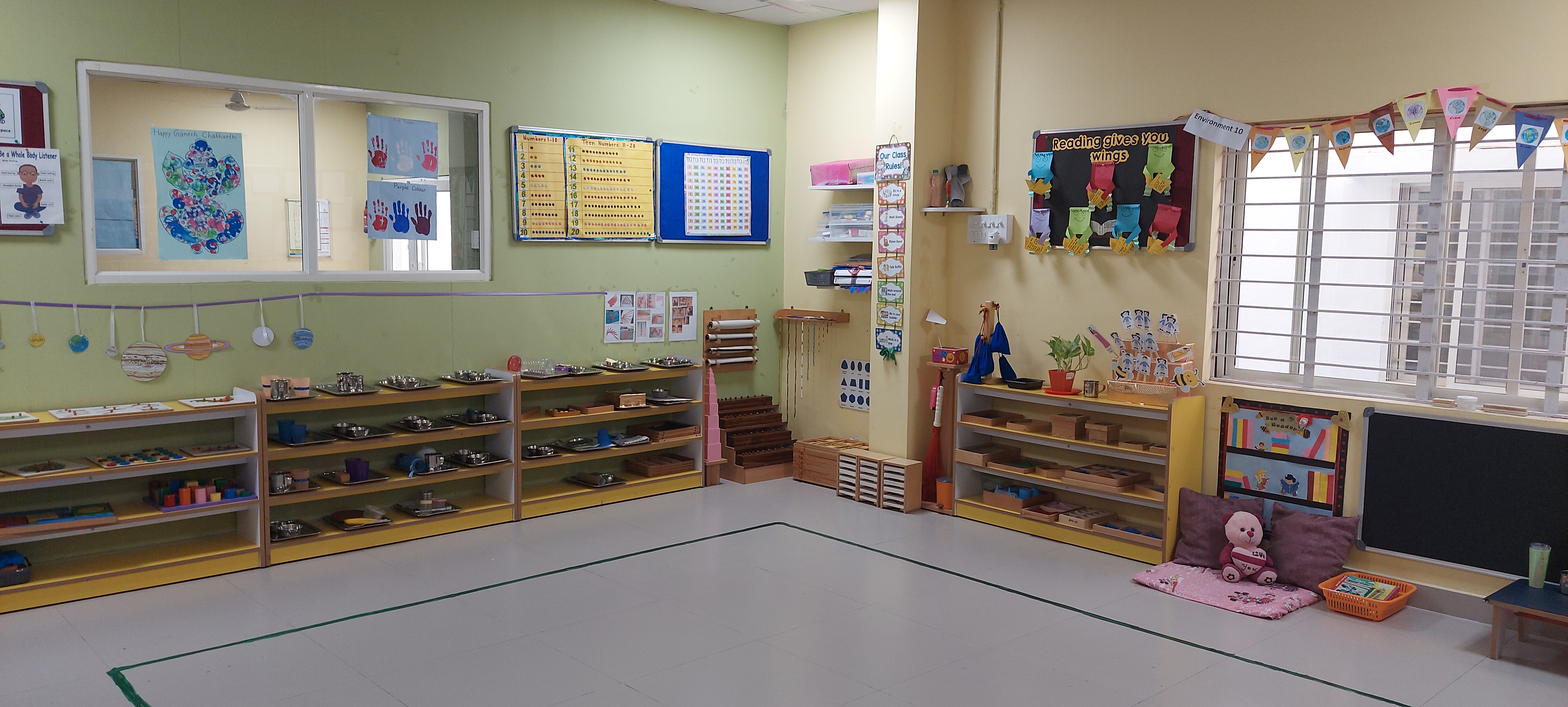
In a Montessori classroom, toilet learning is treated as a skill a child builds with trust and independence, not something to rush. Our teachers work with parents so that home and school use the same words and routine, offer child-sized facilities, and let each child move at their own pace.
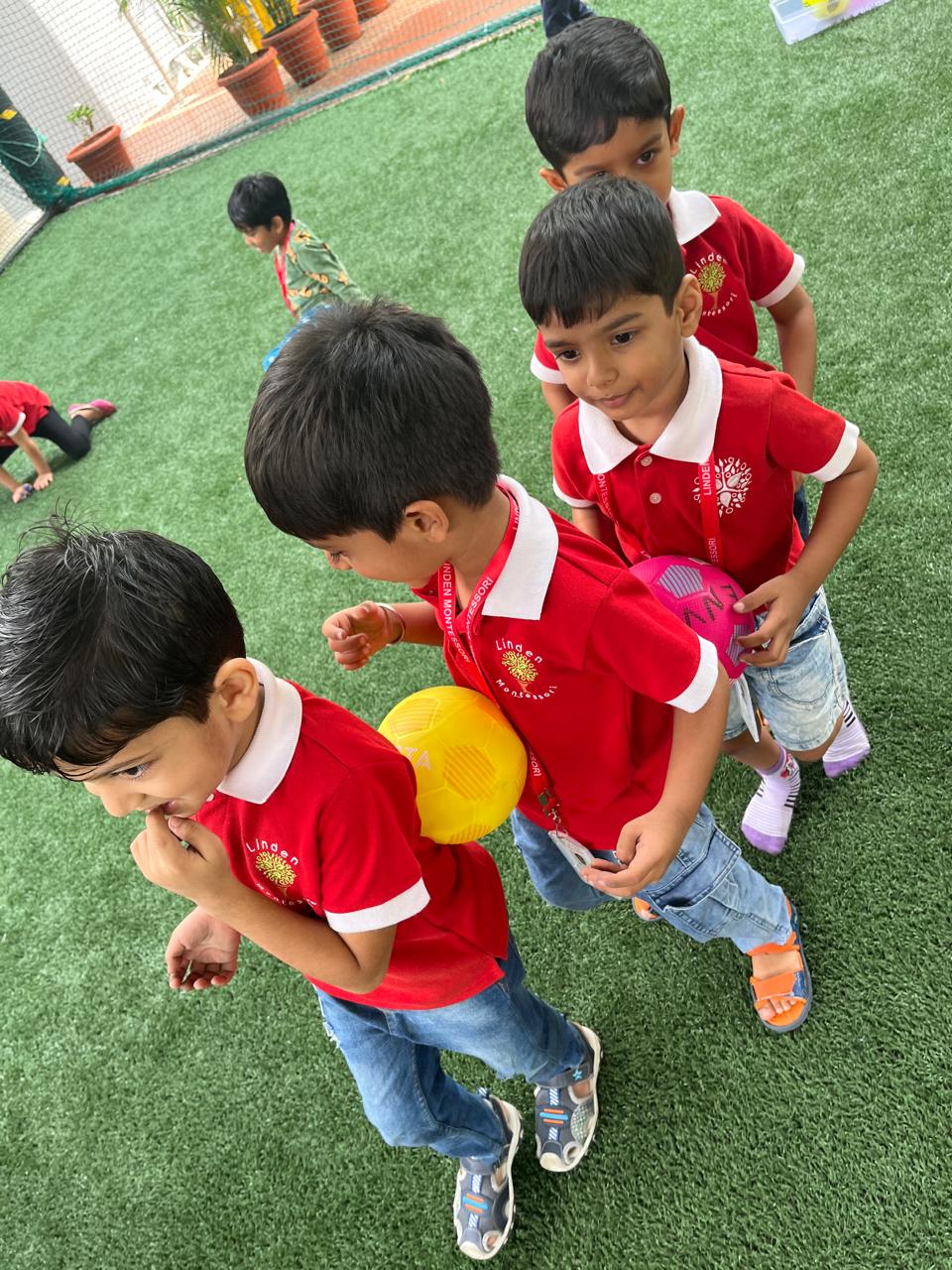
You can see our spaces in Life at Linden and the photo gallery, and read about what makes our infrastructure unique. To see which programs suit your child’s age, take a look at what we offer. Families also share their experiences on our parent stories page.
When should you see a doctor?
Speak with your pediatrician if:
Your child is over four and shows no interest or progress
Urination is painful, or you see blood in urine or stool
Constipation is frequent or stools are hard and painful
A child who was fully trained suddenly has repeated accidents with no clear reason
You are worried about your child’s development
The American Academy of Pediatrics also has helpful toilet-training guidance for parents.
Frequently asked questions about toilet training
How long does potty training take?
It varies a lot. Some children get the basics in a few days of focused effort, while many take several weeks to a few months to be reliably dry in the day. Night-time dryness often takes longer.
What is the best age to start baby potty training?
Most children are ready between 18 and 36 months. Look for readiness signs instead of choosing a fixed date.
Is it okay to start potty training before 18 months?
Some families offer the potty earlier, but true independence usually needs physical and communication skills that develop later. Early practice should stay relaxed and pressure-free.
Is potty training different for boys and girls?
The basic steps are the same. Boys often start by sitting and move to standing later. Girls should learn to wipe front to back.
Should I use rewards?
Small rewards such as stickers can help many children. Praise and attention are just as powerful. Avoid big prizes and never take rewards away as punishment.
My child is starting preschool. Should I wait until they are trained?
Not necessarily. Most preschools help with toilet training. Share your routine and your child’s words for the toilet so everyone is consistent. If you have questions about our approach, contact Linden Montessori.
What if my child refuses completely?
Pause for a couple of weeks and try again. Refusal usually means they are not ready or feel pressured, not that something is wrong.
The bottom line
Potty training is a process, not a race. Watch for readiness, keep the routine steady, praise effort, and treat accidents as part of learning. With patience, most children get there, and every family’s timeline looks a little different.
Want more practical advice for the toddler years? Browse our parenting tips and the Linden Montessori blog. If you would like to visit and see how we support young children, get in touch with Linden Montessori.
See How Linden Supports Little Learners
From child-sized spaces to caring teachers who partner with parents, discover how Linden Montessori helps toddlers grow in confidence and independence in Whitefield, Bangalore.
Schedule a personalized campus tour today to see our classrooms firsthand.