Art and Craft for Preschool: 30 Easy Ideas for Kids
The best art and craft for preschool uses simple household materials like paper, poster paint, leaves, cardboard and atta dough, and lets children explore instead of copying a model. This guide gives 30 easy ideas for ages 2½ to 6, each with materials, steps and the skill it builds.
Picture two paper-plate pizzas. In the first, every topping sits in the same place, because a grown-up showed exactly where it goes. In the second, a three-year-old has stuck all the red circles in one corner and added a lot of glue. Which one taught more?
It is the second one, almost every time. Preschoolers do not need a perfect product. They need to cut, tear, press, pour, mix and decide for themselves. That is the thinking behind this list. It leans towards open-ended art and keeps step-by-step crafts for when your child asks for them.
Every idea below uses things you probably already have at home in Bengaluru: leaves from the garden, atta from the kitchen, bhindi from the vegetable basket, an old cardboard box.
What is the difference between art and craft for preschoolers?
Art is open-ended expression with no model to copy. Craft is making a specific object by following steps. Preschoolers benefit from both, but they learn most from art, where the child makes every decision.
If you could hold up a finished example and say “make yours look like this”, it is a craft. If you simply put out materials and say “see what you can make”, it is art. This list includes both and labels the more open-ended ones.
What do art and craft do for preschool children?
Art and craft build the small hand muscles needed for writing, strengthen hand-eye coordination, and give children a safe way to express feelings and ideas. They also teach patience, choice-making and problem-solving.
Maria Montessori believed the hand is the chief tool of the developing mind. Art and craft are a joyful way to put that idea to work.
How do you set up art time? The Three-Tray Setup
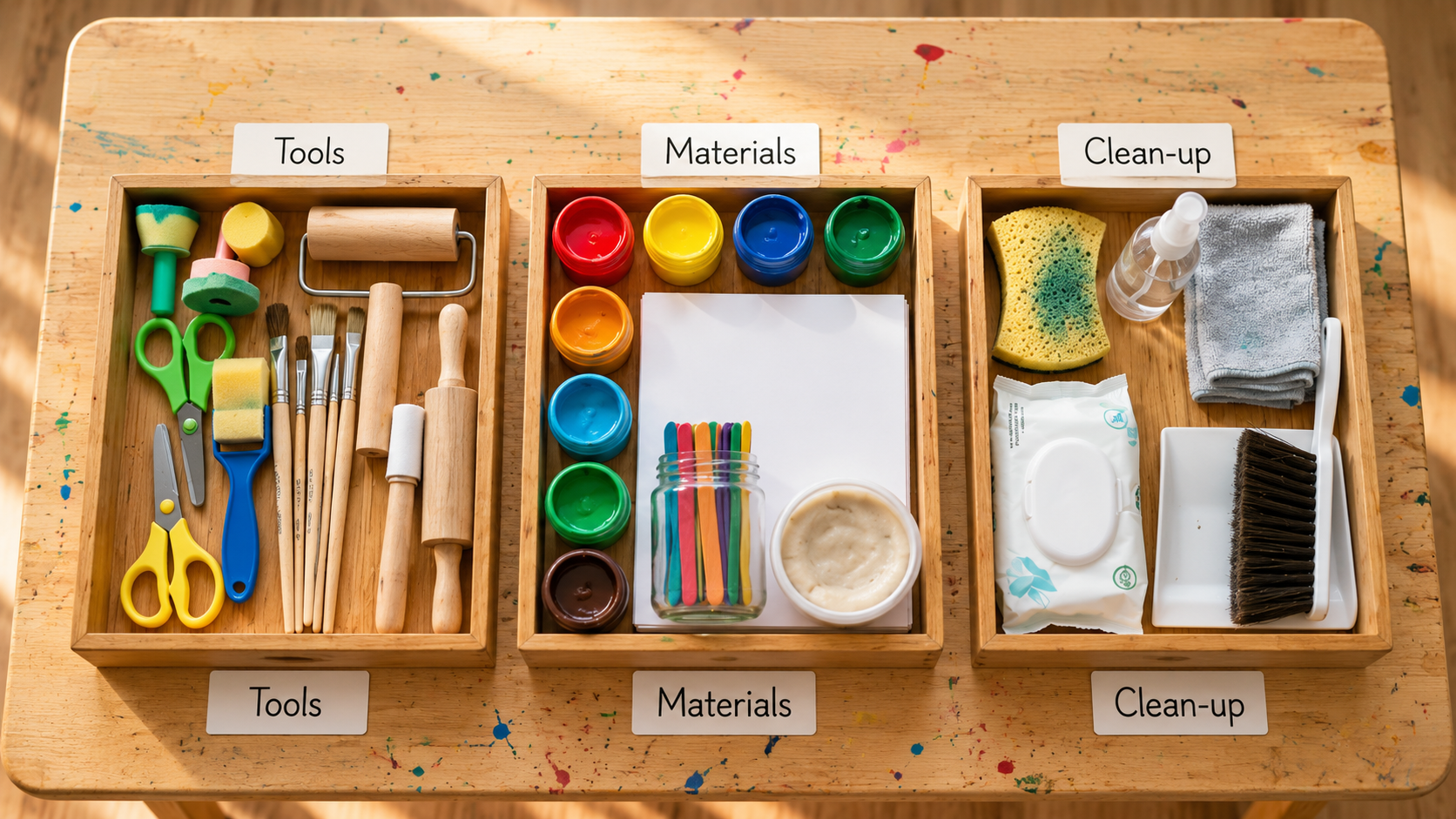
A calm setup makes the difference between a 5-minute scribble and a 20-minute absorbed project.
- 1 Tray 1: Tools. Brushes, a glue stick, child-safe scissors, a sponge.
- 2 Tray 2: Materials. Paper, paint in small pots, leaves or whatever the activity needs.
- 3 Tray 3: Clean-up. A damp cloth, a dry towel and a small bowl of water.
Show the first step slowly with very few words, then step back and let your child take over. Resisting the urge to “fix” their work is the hardest and most valuable part of your job.
What art and craft activities suit each age?
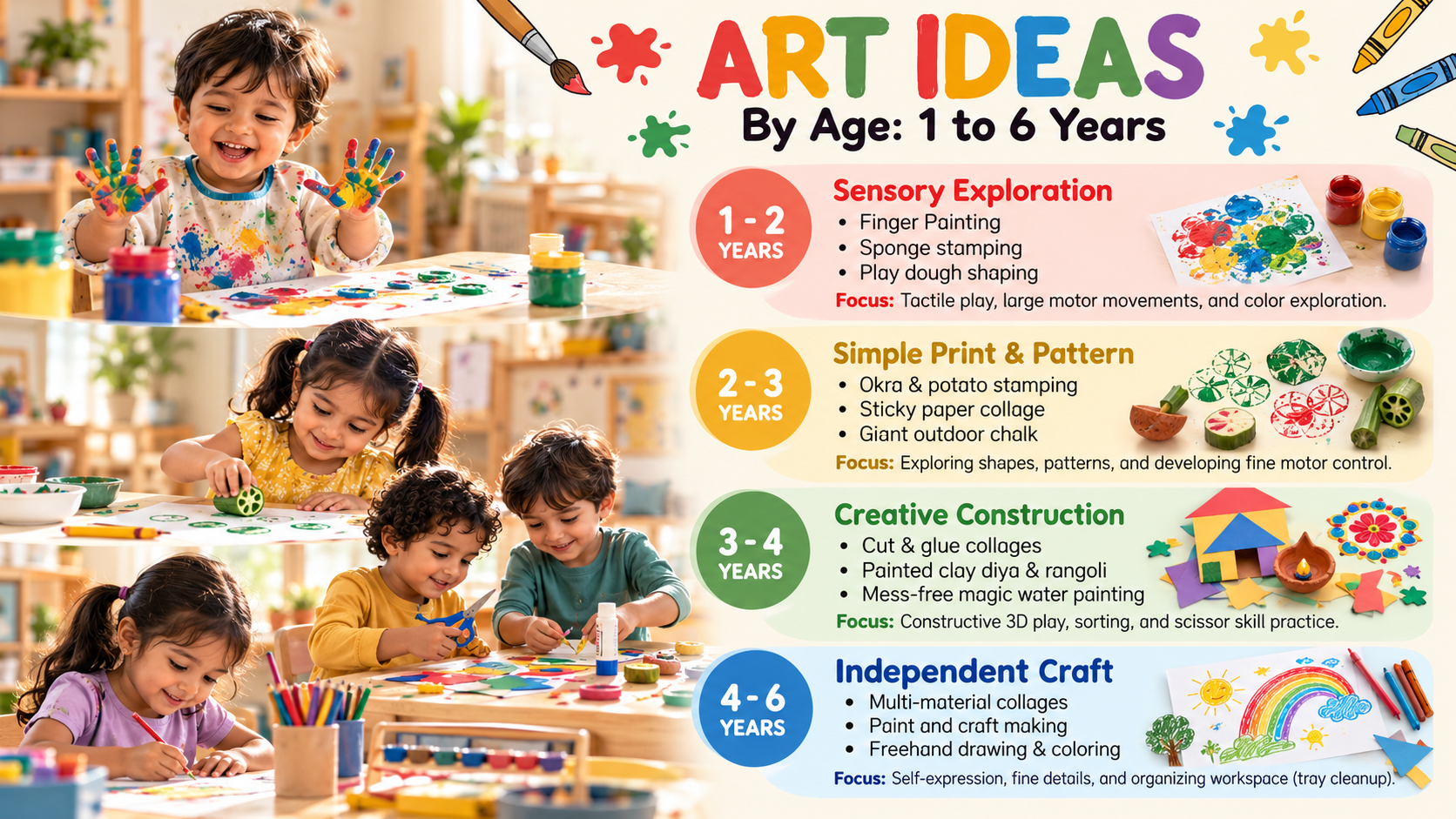
| Age | Good starting activities | Hold off for now |
|---|---|---|
| 2½–3 years | Sponge stamping, finger painting, tearing paper, dough | Small beads, detailed cutting |
| 3–4 years | Leaf printing, straight-line snipping, gluing shapes, pebble painting | Fiddly folding, tiny pieces |
| 4–6 years | Weaving, curved cutting, paper boats, collage, rangoli | Nothing. Offer more challenge and more choice |
What should you watch out for? Art and craft safety
Choose non-toxic, washable paints and glue, and keep an eye on children who still mouth things.
Avoid small items like beads, buttons and bottle caps for children under three.
Use child-safe scissors and sit with your child while they cut.
Skip loose glitter, which spreads and irritates eyes.
Supervise anything involving water, soap or paint near the mouth.
Keep salt dough away from pets. Large amounts of salt are harmful to dogs.
30 easy art and craft ideas for preschoolers
Each idea shows a starting age, mess level and a typical time. “Builds” lists the main skills.
Painting and printing (8 ideas)
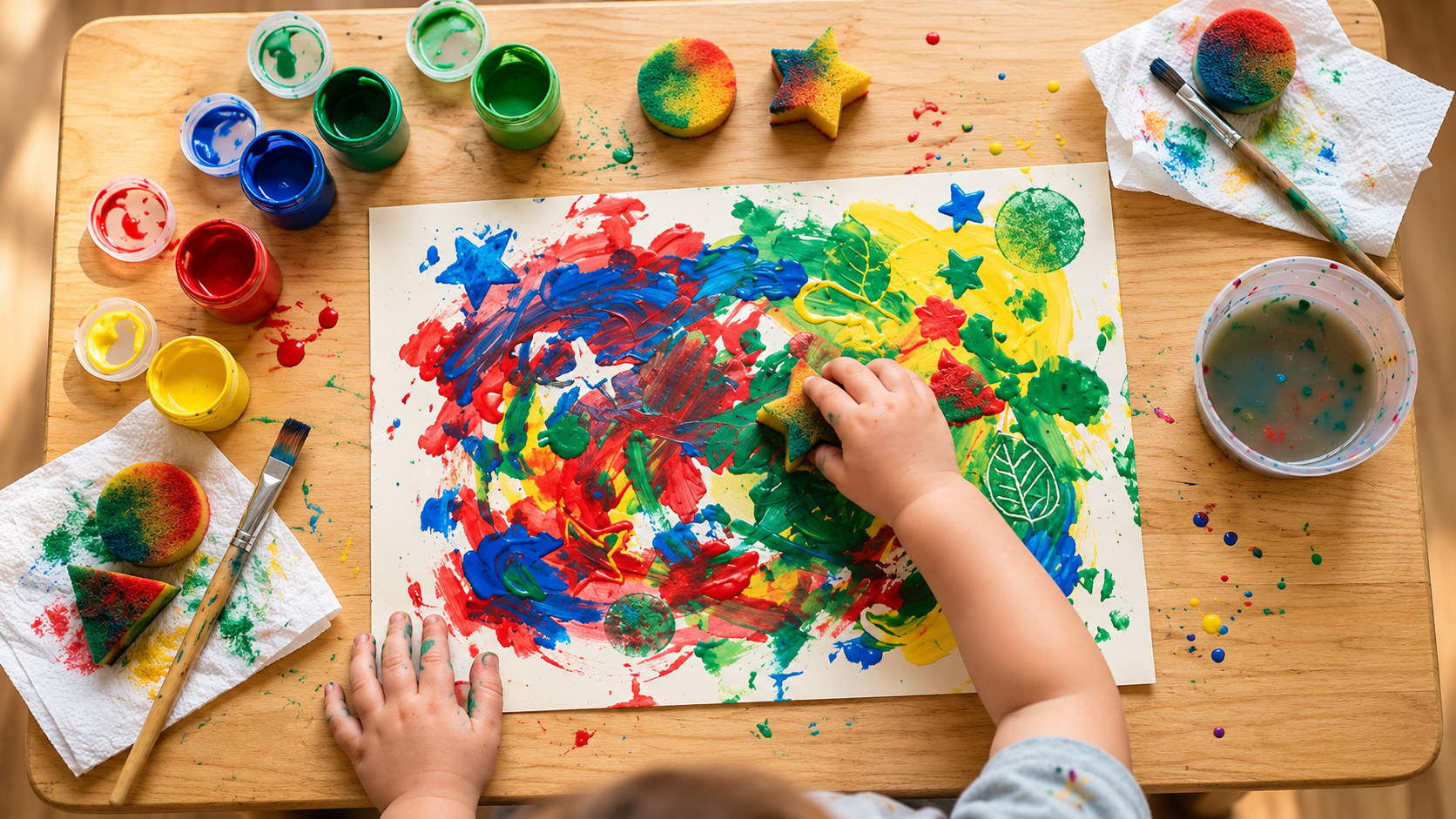
Sponge-stamp painting
You need: a kitchen sponge cut into shapes, poster paint on a plate, paper.
Try: Press, lift, repeat. Show one stamp, then step back.
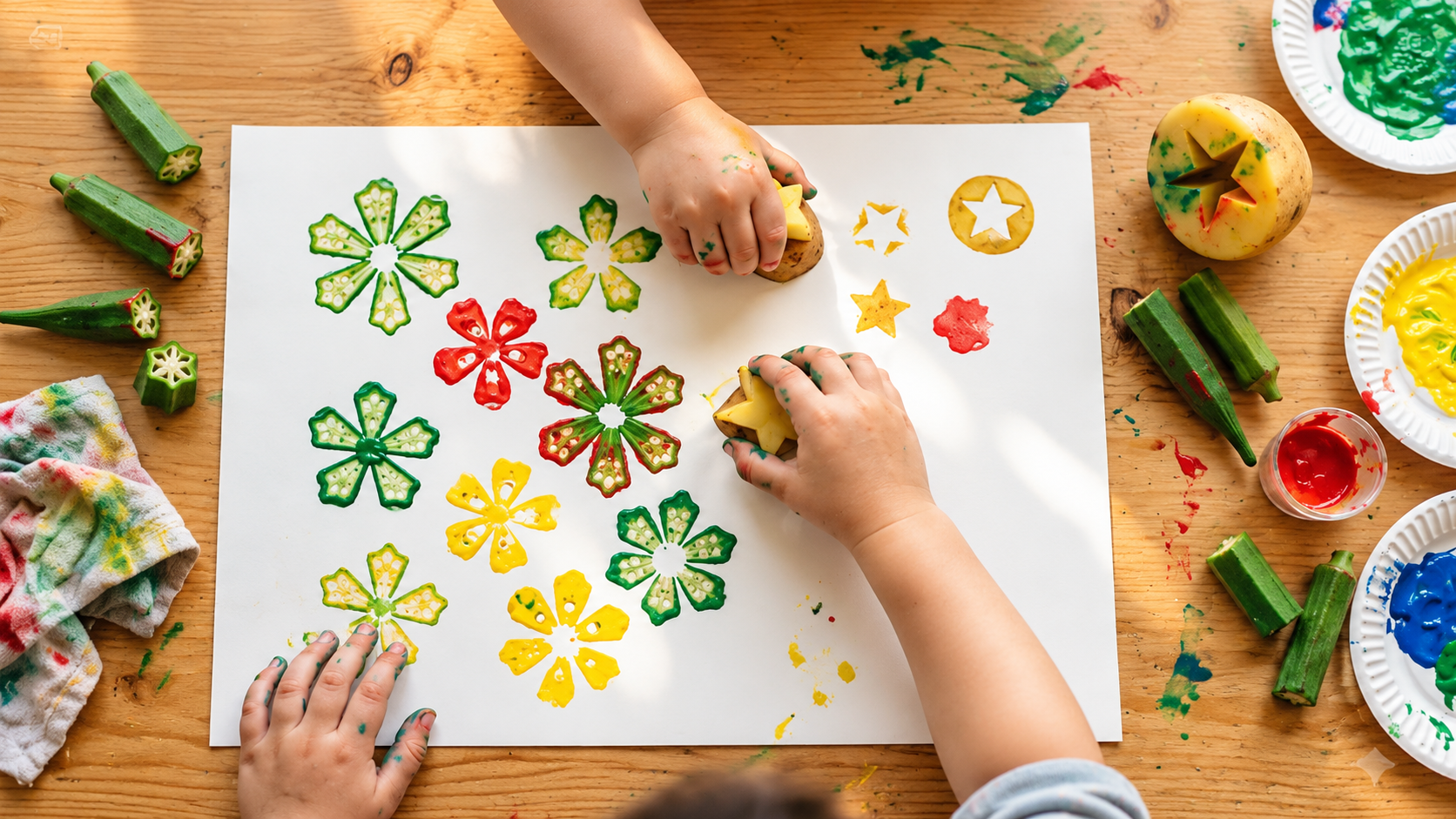
Okra and potato printing
You need: a bhindi cut crosswise, a potato half, paint.
Try: Dip and press. Okra makes a perfect little star.
Finger painting on a big sheet
You need: washable paint, a large sheet taped to a table or floor.
Try: Let them swirl, dab and mix with no goal at all.
Water painting on a wall
You need: a bucket of water, a wide brush, a sunny outside wall.
Try: Paint and watch the “colour” fade away.
Crayon resist watercolour
You need: white paper, a white or light crayon, watery paint.
Try: Draw first, then paint over it and watch the drawing appear.
Salt painting
You need: white glue, table salt, watercolour, a dropper.
Try: Squeeze glue lines, sprinkle salt, then touch drops of colour to the salt and watch it spread.
Toy-car track painting
You need: small toy cars, shallow paint trays, a big sheet.
Try: Roll the wheels through paint and drive across the paper.
Cotton-bud dot art
You need: cotton buds, paint, paper with a circle drawn on it.
Try: Fill the circle with dots, like a simple dot mandala.
Tearing, cutting and pasting (6 ideas)
Torn-paper collage
You need: coloured paper, a glue stick, a backing sheet.
Try: Tear first, then stick wherever feels right.
Contact-paper suncatcher
You need: clear sticky contact paper, flower petals, tissue scraps.
Try: Tape it sticky-side up, press on the pieces, cover with a second sheet and hang in a window.
Snipping strips
You need: child-safe scissors, paper strips about 2 cm wide.
Try: Snip each strip into pieces. Call them “rain” or “grass”.
Paper-plate weaving
You need: a paper plate with slits cut around the edge, wool or ribbon.
Try: Weave the wool over and under.
Paper-chain caterpillar
You need: paper strips and a glue stick.
Try: Loop and stick strips together link by link.
Glue-a-shape picture
You need: pre-cut triangles, squares and circles, glue stick, paper.
Try: Let your child choose the shapes and decide what to build.
Nature and recycled art (8 ideas)
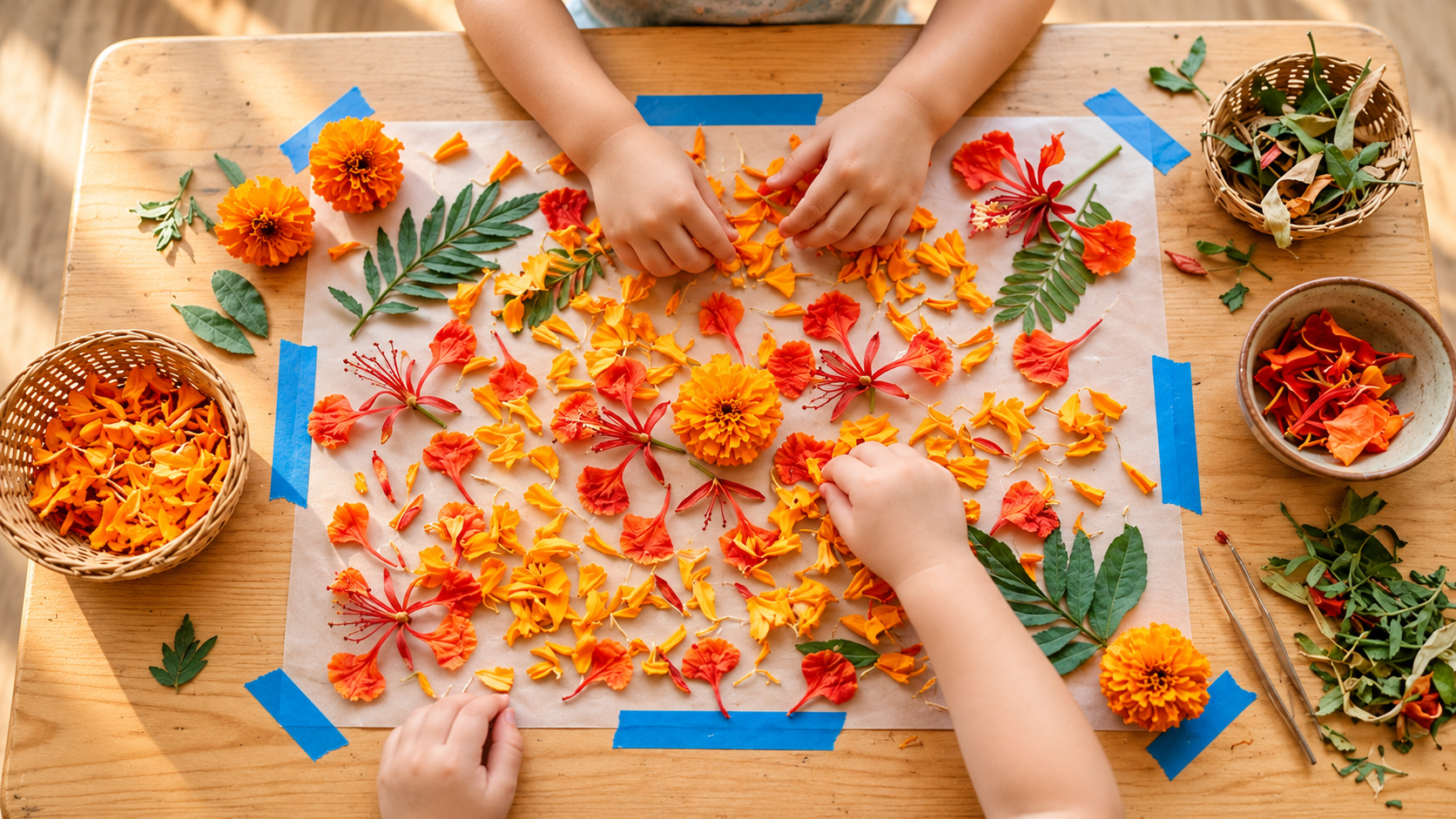
Leaf rubbings
You need: leaves, thin paper, crayons with the paper wrapper off.
Try: Put the leaf under the paper, vein-side up, and rub the side of the crayon across it.
Nature collage
You need: petals, leaves and twigs from the garden, sticky paper or glue.
Try: Go on a collecting walk first, then arrange and stick. Marigold, hibiscus and gulmohar petals look stunning.
Pebble painting
You need: smooth, washed, dry pebbles, poster paint.
Try: Paint patterns, faces or animals. Seal with clear varnish if you want to keep them.
Twig frame
You need: four twigs, wool, a drawing.
Try: Tie the twigs into a square and mount your child’s artwork.
Egg-carton caterpillar
You need: a cut egg carton strip, paint, pipe cleaners.
Try: Paint the segments, then push in pipe-cleaner feelers.
Cardboard-box robot or car
You need: a large box, paint, bottle lids (3+), stickers.
Try: Offer materials and ask “what will it do?”.
Bottle-cap mosaic
You need: clean bottle caps, strong glue (adult applies), cardboard.
Try: Sort by colour and arrange them into a pattern.
Monsoon paper boats
You need: square sheets of newspaper or coloured paper.
Try: Fold together slowly, then float the boat in a tub or a rainy-day puddle.
Clay and dough (4 ideas)
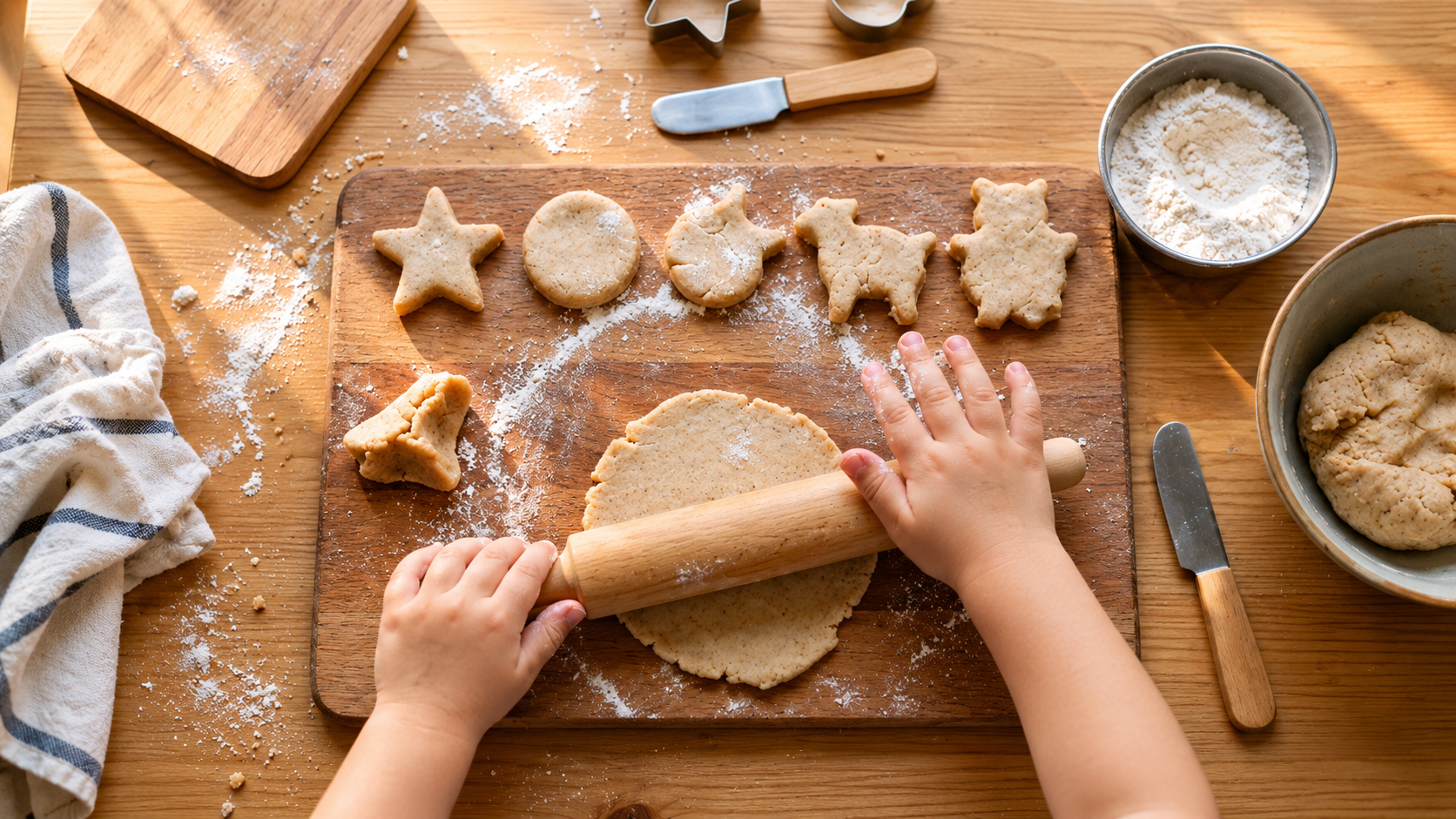
Atta dough play
You need: atta, water, a spoon of oil, small rolling pin or bottle.
Try: Mix into a soft dough and make rotis, balls and snakes. Safe if tasted, though not for eating.
Salt-dough ornaments
You need: 2 cups flour, 1 cup salt, 1 cup water, cookie cutters.
Try: Roll, cut and press. An adult bakes at a low heat until hard.
Pinch-pot diyas
You need: air-dry clay.
Try: Roll a ball, press a thumb into the middle and pinch the edges up.
Dough impressions
You need: dough, leaves, buttons (3+), shells.
Try: Press objects into a flat dough and lift them out to see the prints.
Festival and Indian art (4 ideas)
Warli-style stick art
You need: brown or black paper, white poster paint or chalk.
Try: Draw people from circles, triangles and lines, like the Warli tradition.
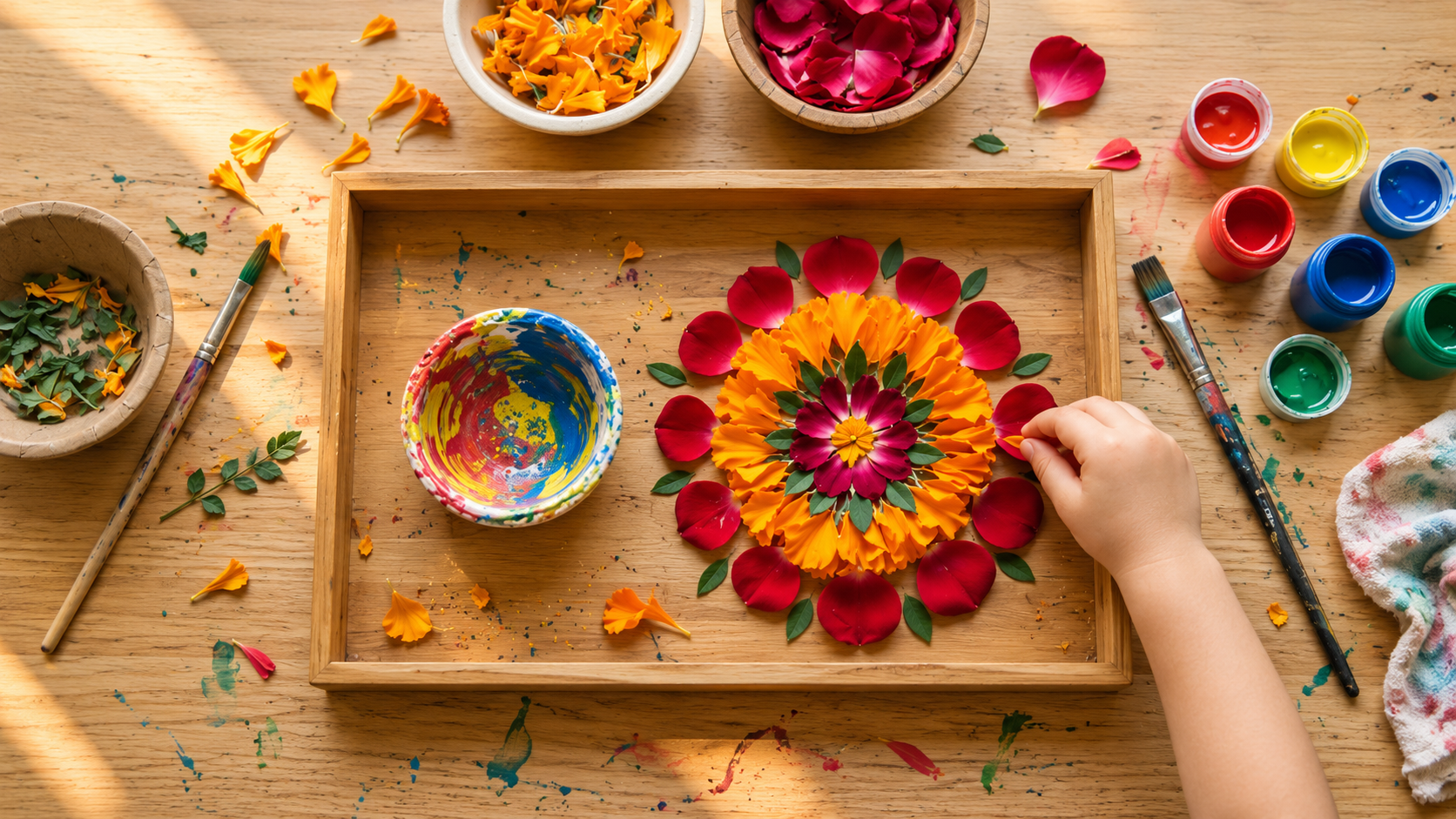
Petal and rice rangoli
You need: a tray, flower petals, dyed rice or rice flour.
Try: Arrange in a pattern. Skip synthetic powders, which can irritate small eyes.
Diya painting
You need: a plain clay diya or paper cut-out, poster paint.
Try: Decorate with dots and swirls.
Handprint tree
You need: paint, paper, a brown crayon.
Try: Print a forearm and hand as a tree, then add fingerprint leaves in any colour.
How long should a preschooler spend on art and craft?
Most preschoolers settle for 10 to 20 minutes. Let them leave and come back. A child who walks away after five minutes has not failed. They have finished.
What should you say about your child’s artwork?
Skip “beautiful!” and ask “tell me about it” or “I notice you used a lot of blue”. Never draw on their work. In a Montessori classroom, adults describe what they see and let the child decide how it looks.
How is art different in a Montessori classroom?
A Montessori classroom treats art as a process, not a product. Children choose their materials, practise with real tools like scissors and brushes, and clear up after themselves. Cutting, pasting, pouring and tearing also appear as practical life activities.
To see how this fits into a school day, read how Linden Montessori balances learning and play and browse our gallery and life at Linden.
What supplies do you need at home?
A starter kit is enough: plain paper, washable poster paint, a few brushes, child-safe scissors, glue sticks, crayons, a kitchen sponge, cotton buds and a tray. Our activity books can add structured practice for drawing and pre-writing.
Keep going with these related guides
Nursery Rhymes List: 50 Popular English Rhymes for Kids
Paint a picture of your favourite rhyme.
Sensory Activities for Preschoolers: 20 Easy Ideas
Many of these crafts double as sensory play.
Short Moral Stories in English
Read a story and illustrate it.
Frequently asked questions
What are easy art and craft activities for preschoolers?
Sponge painting, leaf printing, torn-paper collage, atta dough play and pebble painting are easy to set up, use household items and suit most children from about two and a half.
What art supplies does a preschooler need?
Plain paper, washable non-toxic paint, brushes, crayons, child-safe scissors and glue sticks. A tray and a damp cloth keep things tidy.
When can a child start using scissors?
Many children can start snipping paper strips with child-safe scissors between ages two and a half and three. Always supervise and start with straight snips before curves.
How do I handle the mess?
Use a tray, an apron, newspaper underneath and a damp cloth nearby. Choose outdoor or low-mess activities (water painting, rubbings) on busy days.
My child says “I can’t draw”. What should I do?
Take the pressure off. Try stamping, printing or dough, where there is no “right” way. Praise effort and choices rather than how real it looks.
Does a craft need to look like the example?
No. At this age, the process matters far more than the product. A craft that looks different from the model is usually a sign your child made their own decisions.
Looking for a preschool that values creativity?
If you are exploring Montessori options, our parent’s guide to the best preschool in Whitefield will help you compare.
You can read about our programs or book a visit to see children at work.