Nursery Rhymes List: 50 Popular English Rhymes for Kids
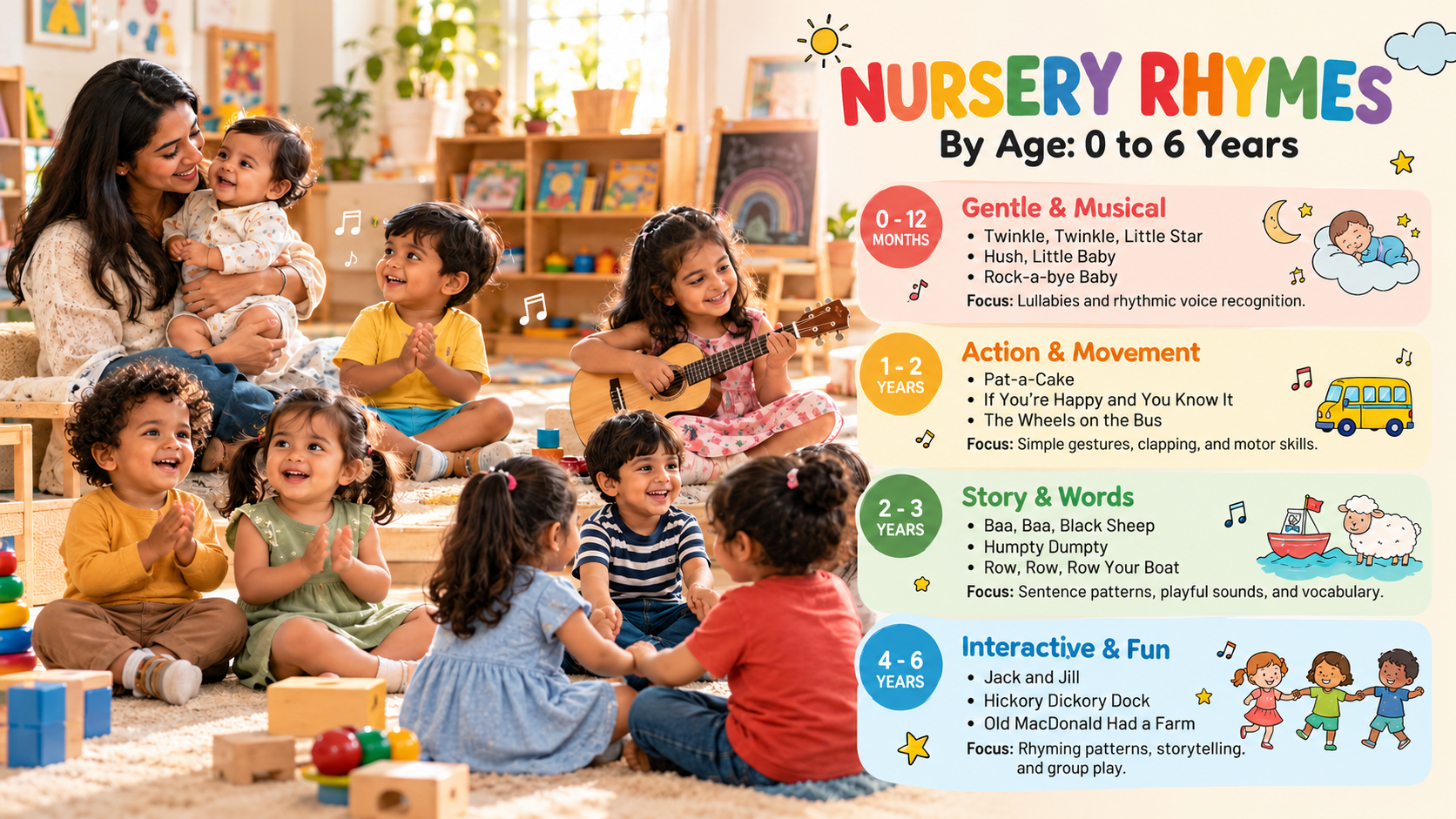
The most popular English nursery rhymes for kids include Twinkle, Twinkle, Little Star, Baa Baa Black Sheep, The Wheels on the Bus, Johnny Johnny Yes Papa, Humpty Dumpty and Old MacDonald Had a Farm. This list sorts 50 rhymes by what they do best (moving, counting, calming) so you can pick the right one for your child’s age and mood.
Ask any parent in Bengaluru what their toddler asks for on repeat, and a rhyme usually tops the list. Johnny Johnny. Wheels on the Bus. Twinkle Twinkle. Again, and again, and again. It can test your patience. It is also, quietly, one of the best things happening in your child’s day.
Most nursery rhymes listed online simply paste fifty sets of lyrics. You already know the words; you grew up on them. What parents really want to know is different: which rhyme suits which age, which one gets a wriggly child moving, which one settles an overtired one, and what each one is actually teaching.
That is what this list is for. Everything below is written from a Montessori point of view, where language is learned through the ears, the voice and the hands long before it is learned from a page.
Why are nursery rhymes good for kids?
Nursery rhymes help children hear the small sounds inside words, which is the foundation of learning to read. The rhythm and repetition also build memory, vocabulary and attention.
Maria Montessori described the years from birth to about six as a sensitive period for language, when children soak up speech with very little effort. Rhymes are one of the gentlest ways to use that window.
How do you use this nursery rhymes list? The Sing–Move–Repeat routine
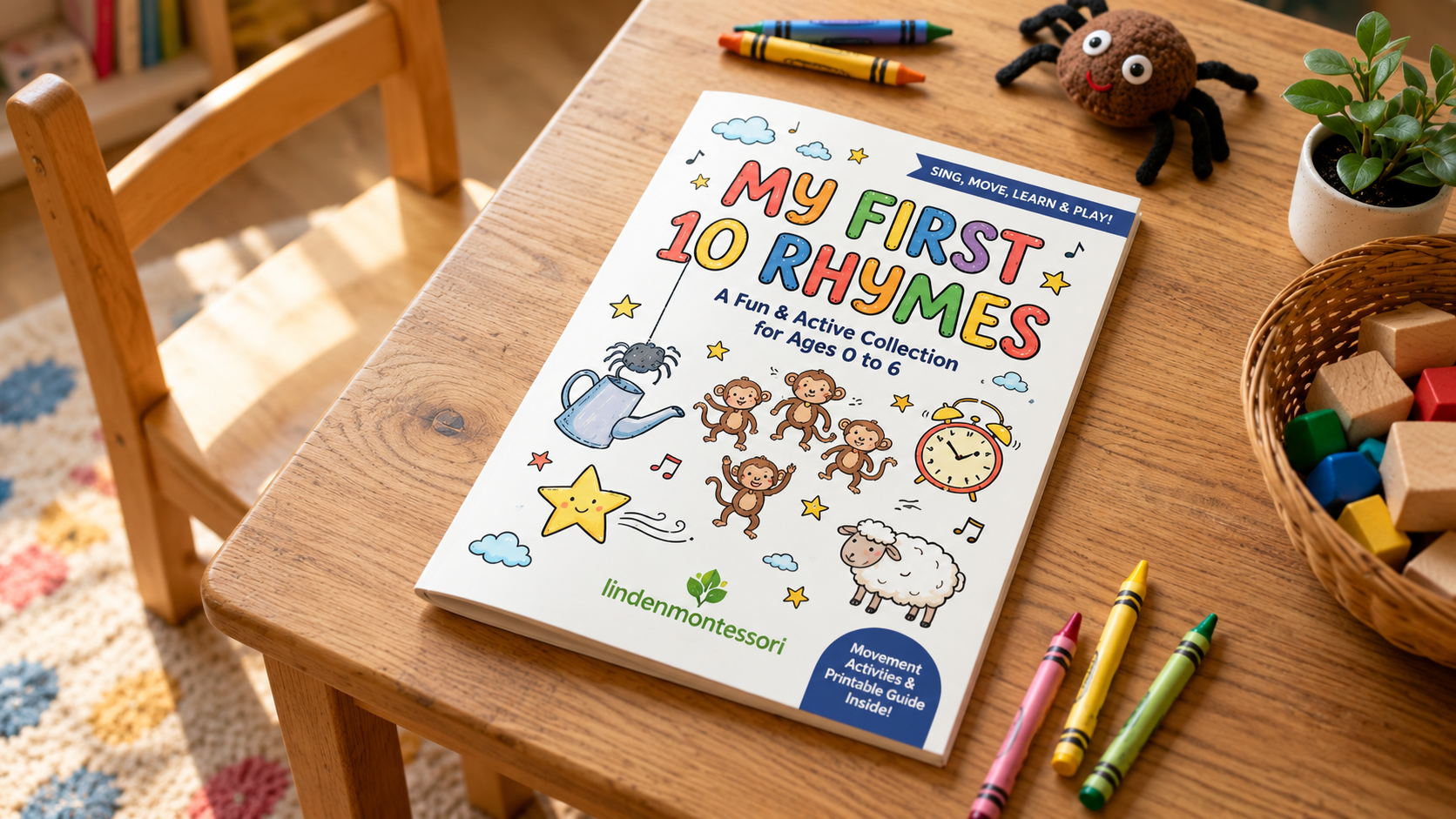
You do not need a lesson plan. Try this simple routine with any rhyme below:
- 1 Sing it slowly first. Children need to hear every word before they can join in.
- 2 Add one action. Just one. Too many movements pull attention away from the words.
- 3 Repeat the same rhyme for a week. Repetition is not boring to a young child. It is how they master it.
- 4 Pause before the last word and let your child fill it in. Predicting the rhyme is a real phonological skill.
What are the best nursery rhymes for each age?
| Age | Start with | Why it works |
|---|---|---|
| 6–18 months | Pat-a-Cake, Incy Wincy Spider, Twinkle Twinkle, Rock-a-Bye Baby | Slow, simple, built on touch and rhythm |
| 18 months–3 years | Wheels on the Bus, Head Shoulders Knees and Toes, If You’re Happy, Baa Baa Black Sheep | Actions, animal sounds, lots of repetition |
| 3–4 years | Five Little Monkeys, Old MacDonald, Hickory Dickory Dock, Humpty Dumpty | Counting, sequencing and short stories |
| 4–6 years | The Alphabet Song, One Two Buckle My Shoe, Hot Cross Buns, Polly Put the Kettle On | Patterns, counting, clapping out syllables |
The 50 best English nursery rhymes for kids
Each rhyme shows a suggested starting age, what it builds, and one thing to try.
Action and movement rhymes (to get the wiggles out)
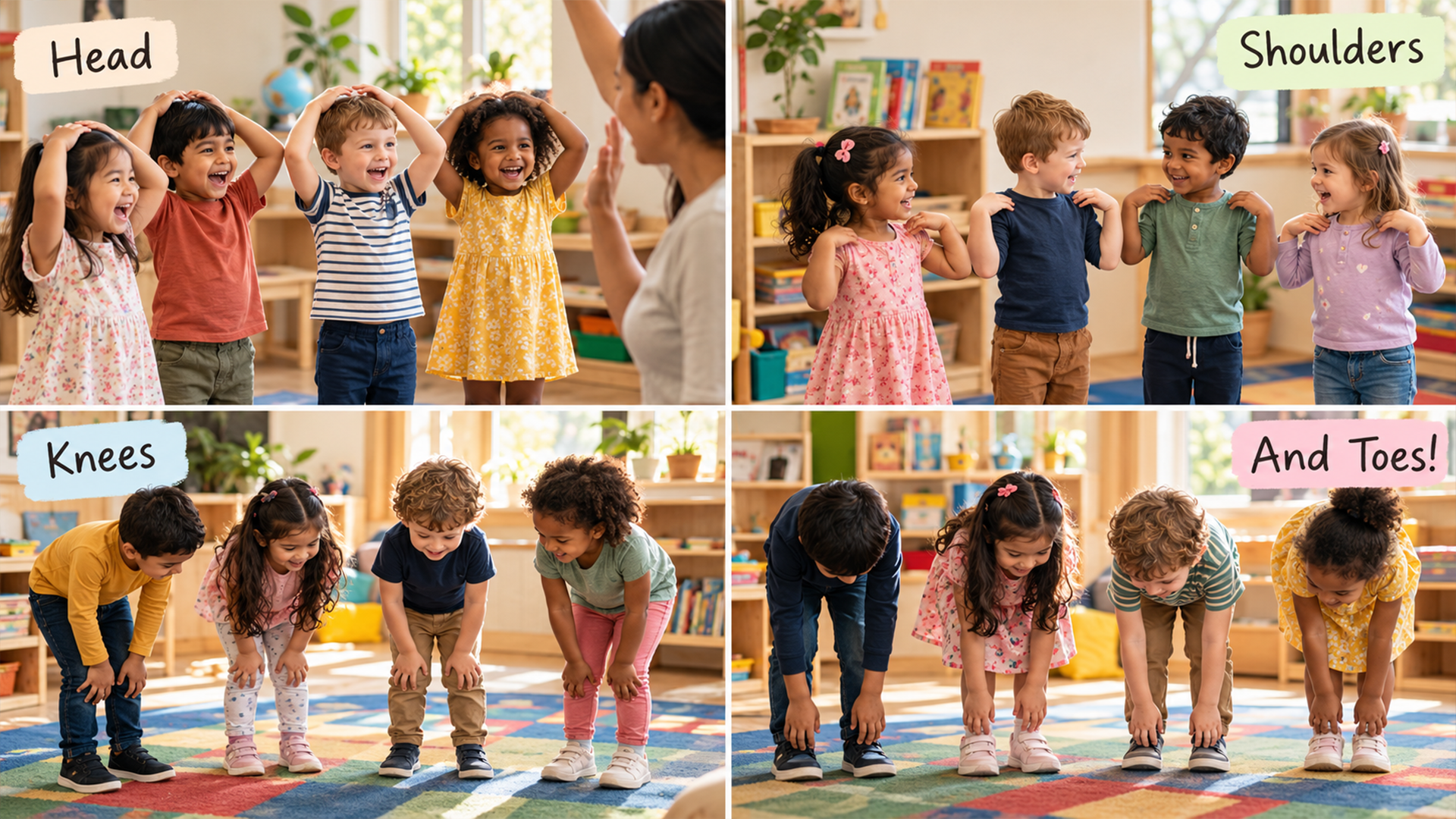
Head, Shoulders, Knees and Toes
Touch each body part as you name it, then sing faster every round.
If You’re Happy and You Know It
Clap, stomp, then let your child invent the next action.
The Wheels on the Bus
Add verses for what your child sees on the road: horns, wipers, even an auto-rickshaw.
Ring a Ring o’ Roses
Hold hands, circle round and sit down together on the last line.
The Hokey Pokey
Name the body part, then let your child lead the next one.
Row, Row, Row Your Boat
Sit facing each other, hold hands and rock to the beat.
Teddy Bear, Teddy Bear, Turn Around
Use a real soft toy, then let your child be the teddy.
Here We Go Round the Mulberry Bush
Swap in “this is the way we wash our hands”. It links neatly to Montessori practical life.
I’m a Little Teapot
Arms become handle and spout. Tip over slowly for the big finish.
London Bridge Is Falling Down
Two children make an arch while the others walk under.
Finger plays and first rhymes (best for babies and toddlers)

Incy Wincy Spider
Climb your fingers up, then wiggle them down as the rain.
Pat-a-Cake
Take your baby’s hands and clap them gently together.
This Little Piggy
Wiggle one toe per line and finish with a tickle.
Finger Family (Daddy Finger)
Pop up each finger as its name is sung.
Open, Shut Them
Opening and closing hands builds the same muscles needed later for holding a pencil.
Round and Round the Garden
Trace a circle on the palm and tickle at the end. Watch for the grin before the tickle.
Where Is Thumbkin?
Hide both hands behind your back, then bring them out one at a time. The tune is the same as Frère Jacques.
Chubby Cheeks, Dimple Chin
Touch each feature as it is named. A favourite in many Indian homes.
Counting rhymes
One, Two, Buckle My Shoe
Hold up fingers for each number and tap shoes on “buckle”.
One, Two, Three, Four, Five, Once I Caught a Fish Alive
Count on fingers, then wiggle the “bitten” finger.
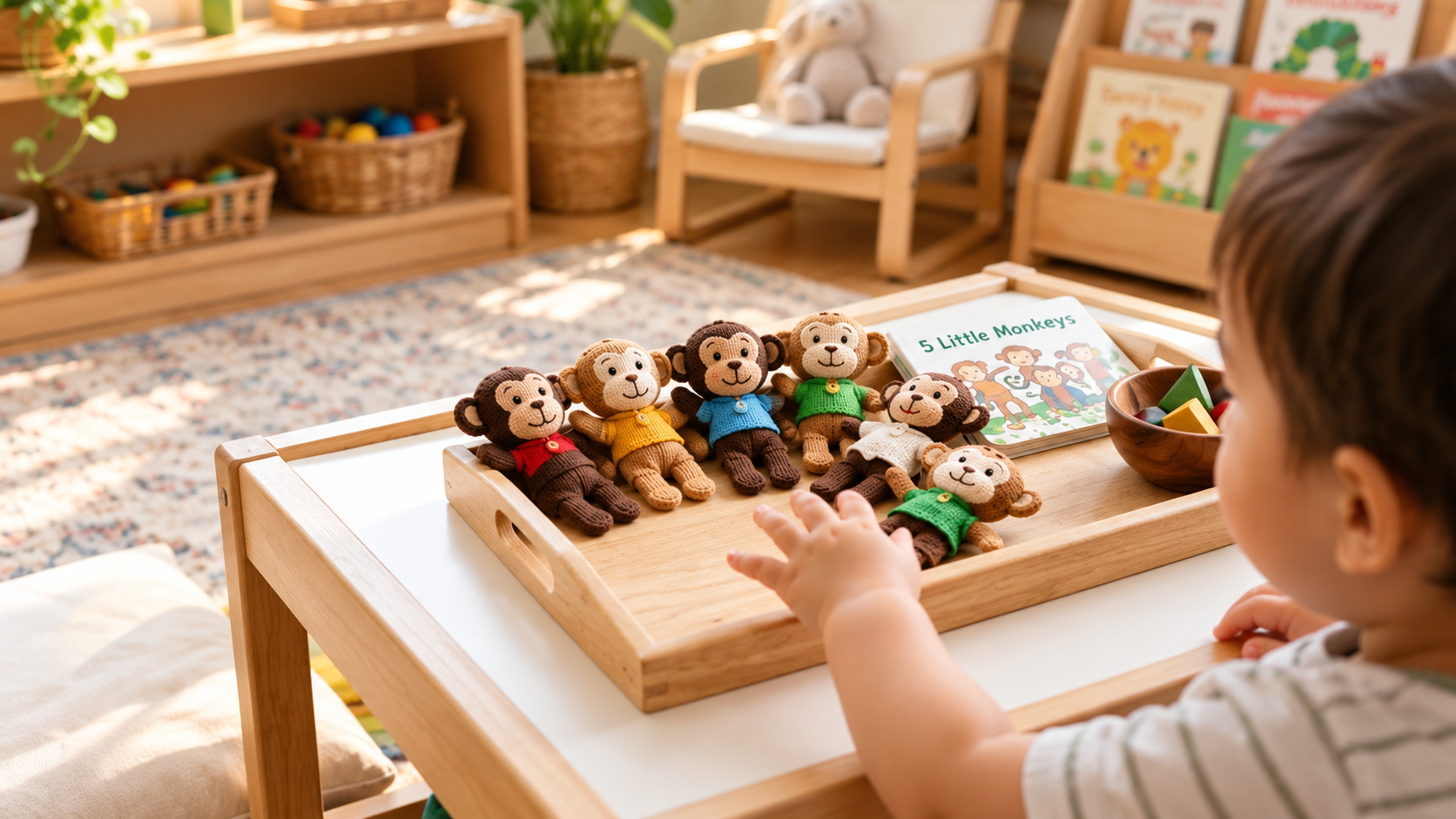
Five Little Monkeys Jumping on the Bed
Use five finger puppets and take one away each verse.
Five Little Ducks
Line up five toy ducks and send them away one by one.
Five Little Speckled Frogs
Cut five green paper frogs and let them “jump” into a blue cloth pond.
Ten in the Bed
Line up ten soft toys on a pillow and let one roll out each verse.
Hickory Dickory Dock
Match “the clock struck one” to a real clock face.
This Old Man
Notice how every number rhymes with its action word (one with thumb, two with shoe).
One Potato, Two Potato
Tap fists in a circle and count each one out.
Animal and farm rhymes
Baa Baa Black Sheep
Sing it to the same tune as Twinkle Twinkle and the Alphabet Song. All three borrow one old French melody.
Old MacDonald Had a Farm
Ask “which animal next?” and add buffalo, peacock or elephant.
Mary Had a Little Lamb
Retell it with toys and talk about caring for animals.
Hey Diddle Diddle
Ask your child to find the two words that rhyme.
Little Bo Peep
Hide soft toy sheep around the room and “find” them together.
BINGO
Replace one letter with a clap in each verse.
Three Little Kittens
Use two matching mittens to talk about pairs.
Pussy Cat, Pussy Cat, Where Have You Been?
Take turns asking and answering in a silly voice.
Story and classic rhymes
Humpty Dumpty
The rhyme never says Humpty is an egg, though most picture books draw him as one. Ask your child what they think.
Jack and Jill
Act out “up” and “down” with a small bucket.
Little Miss Muffet
A gentle way to talk about being startled. Teach the new word “tuffet”.
Hot Cross Buns
Its three-note tune is a classic first song to play on a xylophone or recorder.
Old King Cole
Let your child “play” a different instrument in each verse.
Polly Put the Kettle On
Sing it at a toy tea set and pour real-feeling cups for everyone.
Johnny Johnny, Yes Papa
A simple chat about telling the truth. Our short moral stories in English pair well with it.
The Alphabet Song
In Montessori classrooms children usually learn the sounds of letters first, then the names. Sing this one for fun and teach sounds separately.
Bedtime, weather and calm rhymes
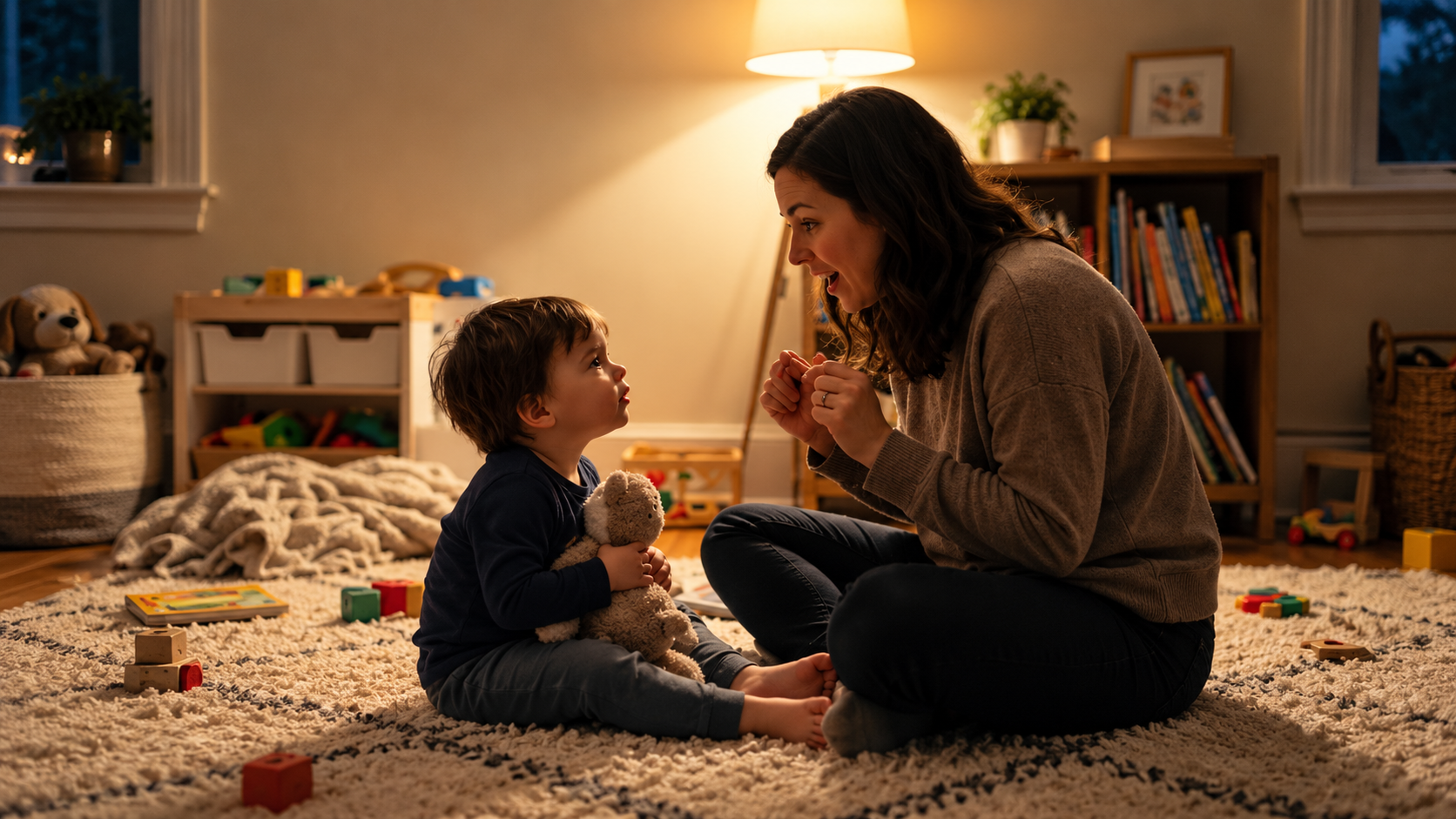
Twinkle, Twinkle, Little Star
Open and close your fingers like a twinkling star. A natural last song of the day.
Rain, Rain, Go Away
Perfect for a rainy Bengaluru afternoon. Swap in family names for the verses.
Rock-a-Bye Baby
Sway slowly. Sing it softly and keep the tempo steady.
Hush, Little Baby
Make up your own verses using things from your home.
Wee Willie Winkie
A character who runs through the town telling children it is time to sleep. Use it to start your wind-down.
Star Light, Star Bright
Step onto the balcony and make a quiet wish together.
Lullaby and Goodnight (Brahms’ Lullaby)
Hum it if you forget the words. The melody does the work.
How do Montessori classrooms use rhymes and songs?
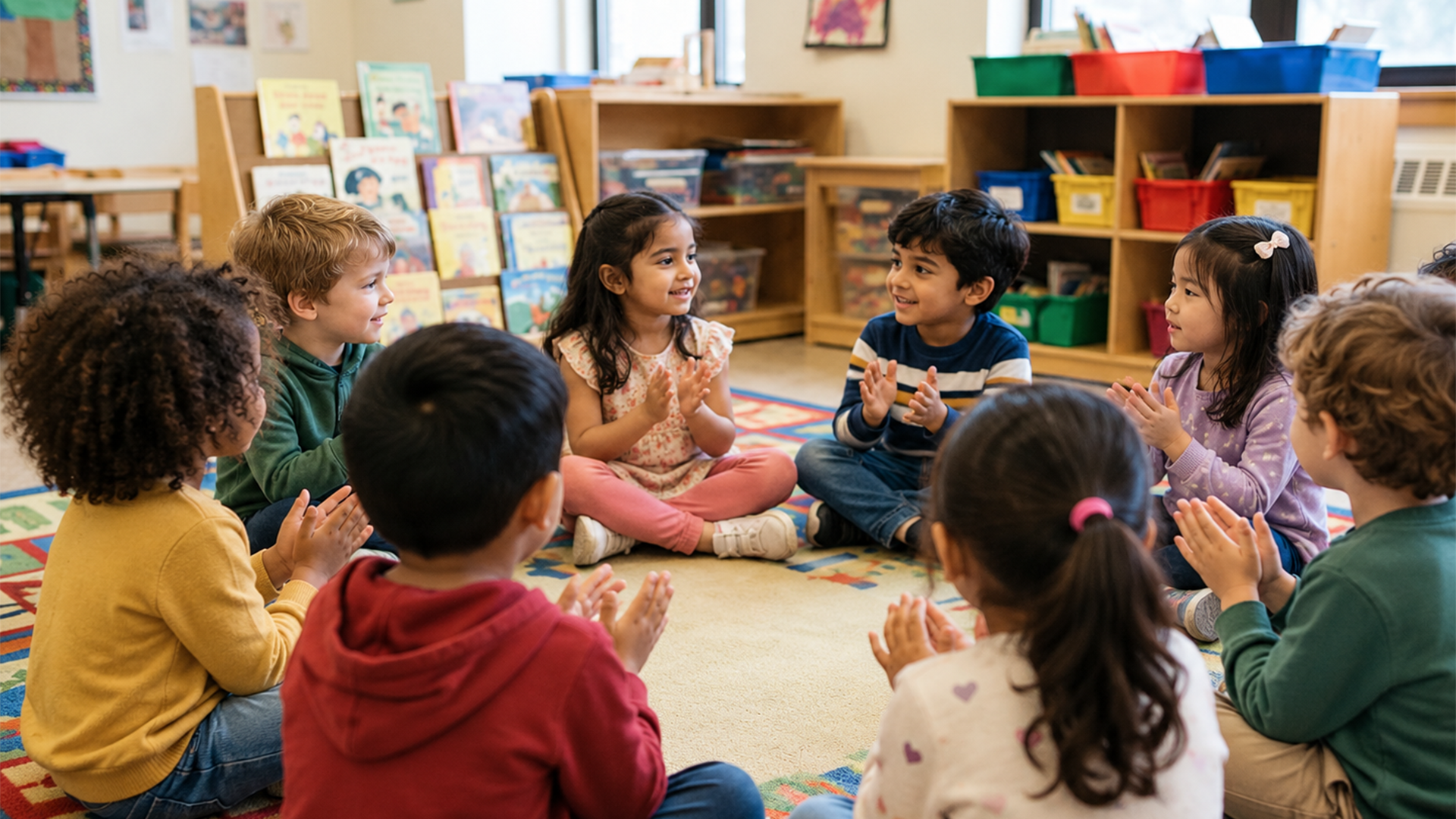
In a Montessori setting, rhymes are never just entertainment. They sit alongside sound games, storytelling and early writing work as part of language development. Children listen for beginning sounds, clap syllables and notice rhyming words before they ever hold a pencil.
You can see how this fits into a day at Linden Montessori in our guide on how we balance learning and play, or explore our Montessori programs in Whitefield.
Can children learn rhymes without a screen?
Yes, and live singing is usually better. The World Health Organization advises no sedentary screen time for children under two and no more than an hour a day for ages two to four. Your own voice, a few props and an audio track are plenty.
If you do use video, watch together and sing along. For more screen-free ideas, browse our parenting tips and our reading books.
Can children learn rhymes in their home language too?
Absolutely. In multilingual cities like Bengaluru, children thrive when they hear rhymes in Kannada, Hindi, Tamil, Telugu and English. Hindi favourites like Machli Jal Ki Rani Hai are just as good for rhythm and memory. Strong home-language rhymes make learning English rhymes easier, not harder.
Keep going with these related guides
Art and Craft for Preschool: 30 Easy Ideas for Kids
Draw your favourite rhyme after you sing it.
Sensory Activities for Preschoolers: 20 Easy Ideas
Pair a rhyme with a sound walk or a shaker.
Frequently asked questions
What is the most popular nursery rhyme?
Twinkle, Twinkle, Little Star, Baa Baa Black Sheep and The Wheels on the Bus are among the most widely sung English nursery rhymes in India and around the world.
At what age should children start learning nursery rhymes?
From birth. Newborns respond to rhythm and the sound of a familiar voice. Most children start joining in with actions around 12 to 18 months and sing whole rhymes by two to three years.
How many nursery rhymes should a child know by age four?
There is no official number. A popular rule of thumb from children’s author Mem Fox suggests eight by age four, but it is a guide, not a clinical benchmark.
Are nursery rhymes good for speech development?
Yes. They train the ear to notice sounds and build vocabulary and memory. If your child is not using words by the expected ages, speak to your paediatrician or a speech-language therapist.
Why does my child want the same rhyme again and again?
Repetition is how young children learn. Predicting what comes next gives them confidence and mastery, so a favourite on repeat is a good sign.
Is it okay to use nursery rhyme videos?
Occasionally, with you watching alongside. Live singing and audio are better for language, and screen time should stay within WHO limits for your child’s age.
Looking for a preschool where language grows through play?
If you are comparing options, read our parent’s guide to the best preschool in Whitefield.
When you are ready to see a Montessori classroom for yourself, book a visit with Linden Montessori.